

 0
0

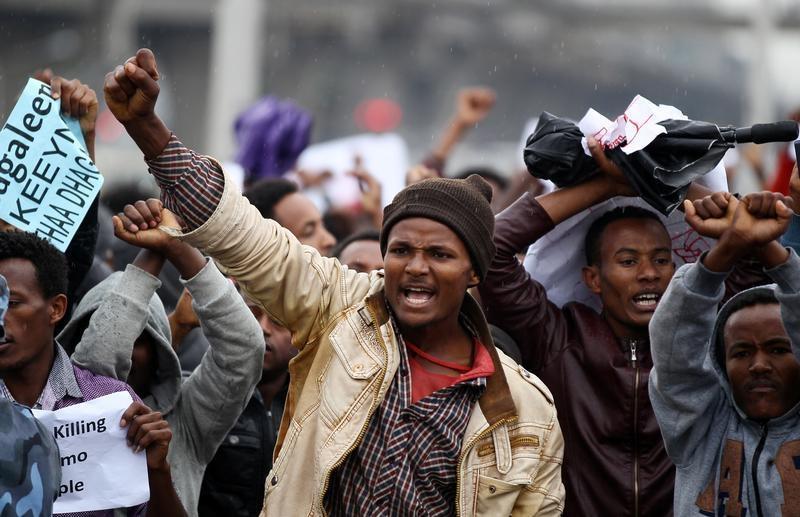

The protests in Oromia started in November over the government’s approach to development, but as the crackdown intensified, protester grievances focused on longstanding abuses and discrimination. In the Amhara region, protesters have voiced concerns over the dominance of those connected to the ruling party in economic and political affairs, complex questions of ethnic identity, and other historic grievances. Protesters vow to continue, and there is no indication of a letup from security forces or new concessions from the government.
Security force torture of people in detention has been pervasive. Girma (not his real name), an 18-year-old student, was released last week from an Ethiopian military camp seven months after he was arrested at a protest with his classmates. He told me when I talked with him after his release that the nightly beatings left him with permanent injuries that make it hard for him to walk. He is banned from returning to school and afraid he will be arrested again if he seeks medical care. He still hears the screams of the "hundreds of protesters still there who were tortured every night.”
Donor countries to Ethiopia have been largely silent about the brutal crackdown, presumably in part due to the Ethiopian government’s strategic relationships on security, peacekeeping, migration, and development. For years, the United States, the United Kingdom, and other influential governments have basically rejected public condemnation of the Ethiopian government’s repressive practices. But a strategy of "quiet diplomacy” is increasingly limited as Ethiopia’s human rights situation declines and its heavy-handed response to the largely peaceful protests is fueling more anger and frustration.
The small bit of good news is that the international silence on Ethiopia was broken on August 10, when the UN’s top human rights official, Zeid Ra'ad Al Hussein, told Reuters that an international investigation and accountability are needed for the killings of protesters.
The protesters I spoke with in recent weeks have been increasingly reassessing the effectiveness of their peaceful protests in the absence of justice, accountability, and international condemnation of the government’s killing, torture, and arbitrary arrests. They told me they are losing faith in Western governments to offer even the mildest criticism of their government.
There are few opportunities inside the country to monitor the government’s human rights record, to hold officials to account, or to access justice. After elections in 2015 that did not meet international standards, the government holds 100 percent of the seats in federal and regional parliaments, preventing any serious parliamentary debate. The courts have little independence on politically sensitive cases and the misuse of the anti-terrorism law is illustrated through the ongoing trial of an opposition leader and advocate for nonviolence, Bekele Gerba, the ongoing trial of a former World Bank translator, Pastor Omot Agwa, and the conviction of numerous journalists on trumped-up charges. Numerous restrictions on independent media and nongovernmental organizations result in little scrutiny of abusive security forces. International journalists also face restrictions as three journalists detained during the recent protests can attest to.
Ethiopia’s Human Rights Commission should be investigating abuses by security forces. But its lack of independence was underscored by its oral report on the protests to parliament in June. It concluded that the lethal force used by security forces in Oromia was proportionate to the risk they faced from the protesters. It is not known whether a written version of the report is available to justify such a seemingly politicized conclusion. The briefing was issued just a few days before Human Rights Watch issued a report describing the excessive use of force that resulted in the killing of an estimated 400 people during the first six months of the protests.
International scrutiny of Ethiopia’s rights record has also been lacking despite its June election to the UN Security Council, and its membership on the UN Human Rights Council – which requires it to uphold the "highest standards of human rights” and cooperate with UN monitors. Ethiopia has refused entry to all UN special rapporteurs since 2007. Among the outstanding requests are from the special rapporteurs on torture, freedom of opinion and expression, and peaceful assembly.
Ethiopia’s allies should back the call from the UN human rights high commissioner and press for an international investigation. Such a move will send a powerful and overdue message to the Ethiopian government that its security forces cannot shoot and kill peaceful protesters with impunity. And it will also send an important message to the victims and families that their pleas for justice are being heard.
Ethiopia’s allies need to urgently embark on a new approach to Ethiopia before the current situation descends into an even more dangerous and irreversible political and human rights crisis. They could play a leading role in pushing for investigative or monitoring mechanisms to hold the government to account for its brutal response to citizens exercising their fundamental rights to expression and assembly – or the toll of the dead and the tortured will continue to rise.
Girma, the young student, says he wants to flee the country once his health improves. "I’m leaving because there will never be justice in my country for what happened to me and the world will not do anything,” he told me. "So I will leave rather than wait for death.”

MOGADISHU / MINNEAPOLIS — Somali rapper Sharmarke Abdinasir Mohamed, widely known as Sharma Boy, is facing renewed scrutiny following allegations that he used threats, blackmail and sustained pressure to obtain thousands of dollars from a Somali-American woman in the United States. Full Article

A community report circulating among Somali residents in Minnesota has raised allegations suggesting that former Somali Finance Minister Abdirahman Duale Beileh may have indirect links to individuals involved in the "Feeding Our Future" fraud case, one of the largest federal financial investigations in the state's history. The allegations have not been confirmed by U.S. authorities, and no official charges have been filed against Beileh. Full Article

The First Grade Court of Mudug Region in Gaalkacyo has issued an order mandating the immediate court appearance of two defendants: Hodan Maxamud Diiriye (34) and Cabdicaasiis Nuur Xaashi Calas (65). Both individuals are accused in a case filed by complainant Marxuumad Saabiriin Saylaan Cabdille Wees & DPL and her family. Full Article
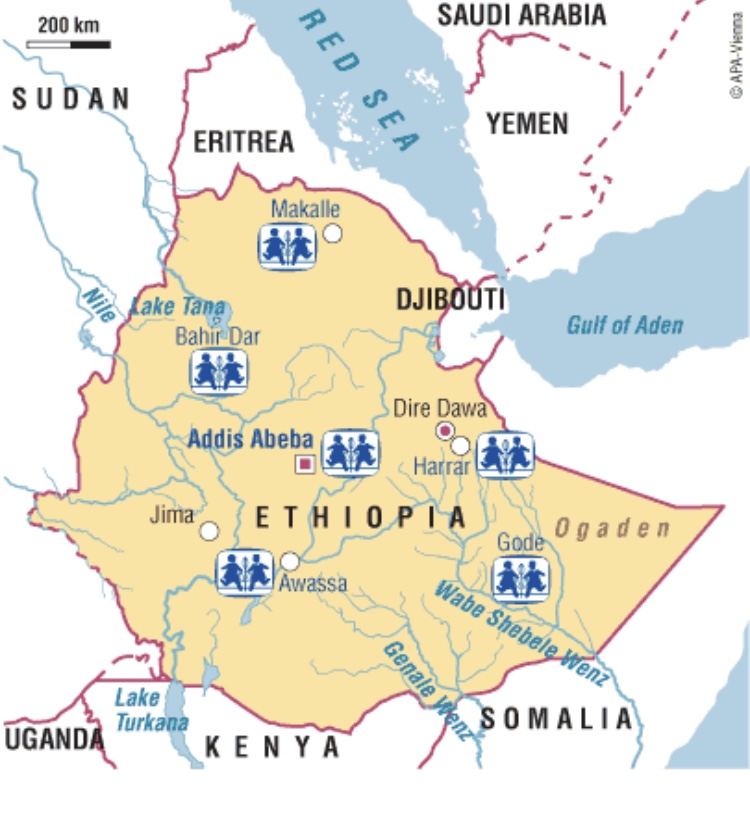
ETHIOPIA'S SACRED FORESTS ARE SHRINKING. CAN HE SAVE THEM? Full Article
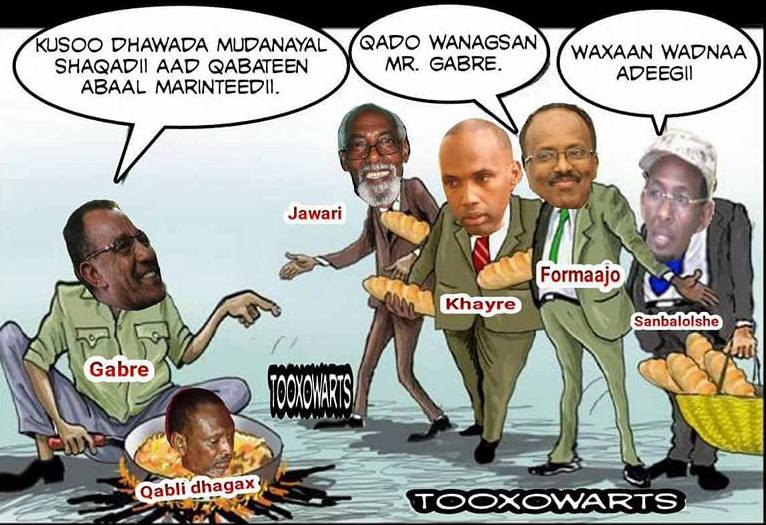
Waagacusub.net - The government grossly violated the Constitution and International Laws in handing over ONLF senior leader Qalbi Dhagah to Ethiopia, an international legal expert has said noting the government failed to study the relevant laws before acceding to Ethiopia's request to surrender the embattled leader. Full Article
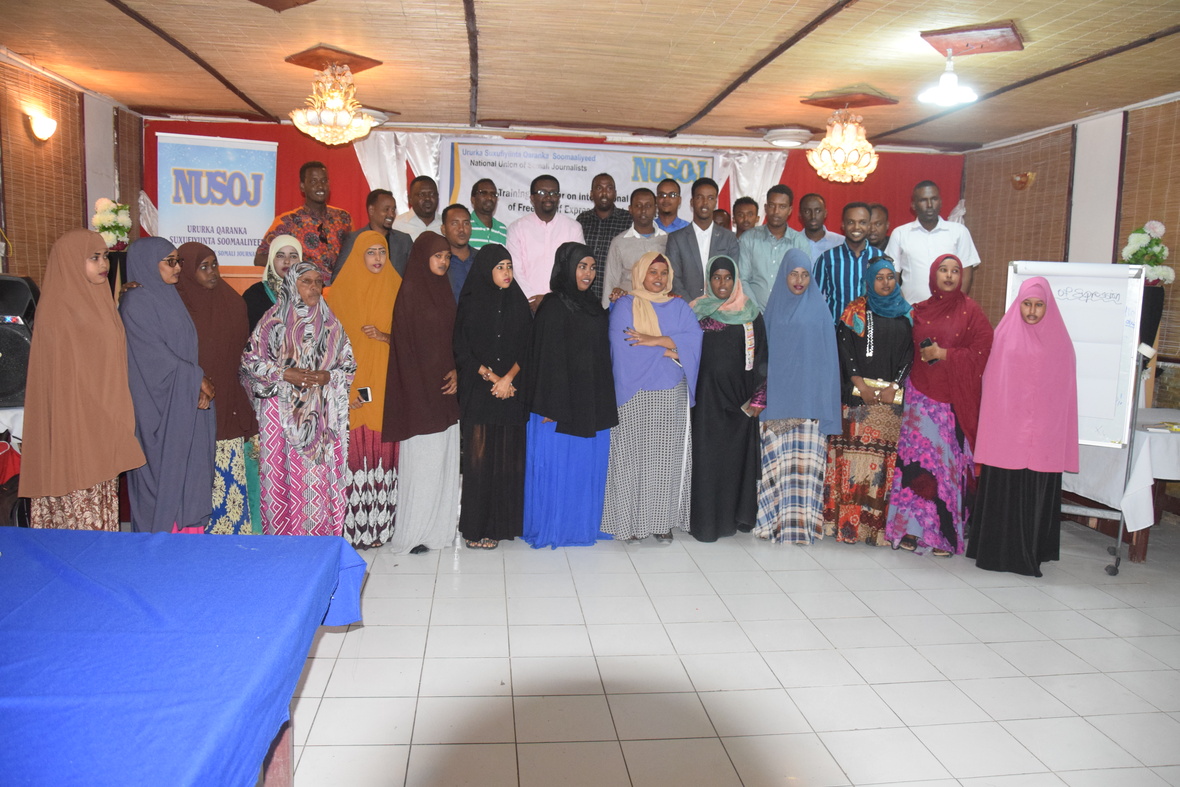
The National Union of Somali Journalists (NUSOJ) has delivered a training seminar in Mogadishu, Somalia, on International Standards of Freedom of Expression for 30 journalists from private media. Full Article
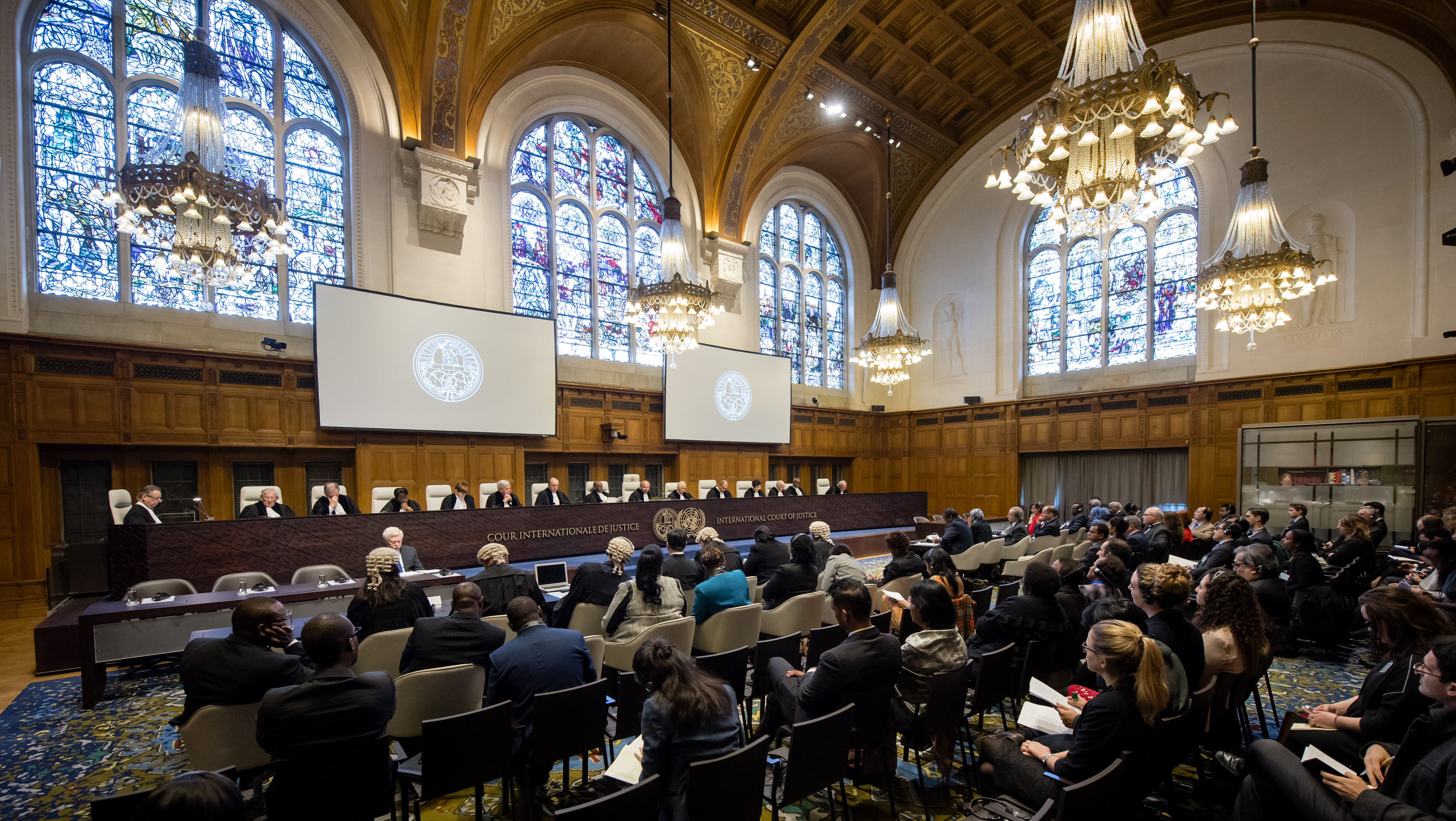
BREAKING: The International Court of Justice rejects Kenya's application that #ICJ does not have jurisdiction over the maritime dispute case Full Article
The United Nations, African Union, European Union, Inter-Governmental Authority on Development, Ethiopia, Italy, Sweden, the United Kingdom, and the United States are concerned about the unfolding dispute within the Galmudug regional assembly and between members of the assembly and President Abdikarim Guled. Full Article
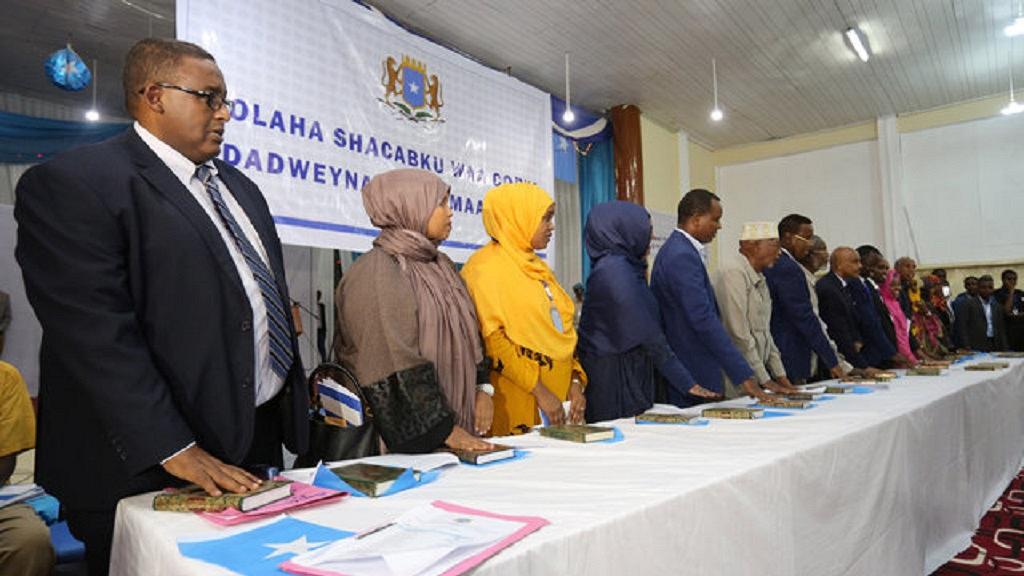
The international community has warned Somalia's new parliament against corruption practices, emphasising the need for the embattled nation to "move forward" as new MPs are set to select the next President. Full Article
Mogadishu, 11 December 2016 – The United Nations, African Union, European Union, Inter-Governmental Authority on Development, Ethiopia, Italy, Sweden, the United Kingdom and the United States are gravely concerned about the holding of a vote in the HirShabelle interim capital of Jowhar yesterday for a seat in the House of the People that was won by a disqualified candidate. Full Article
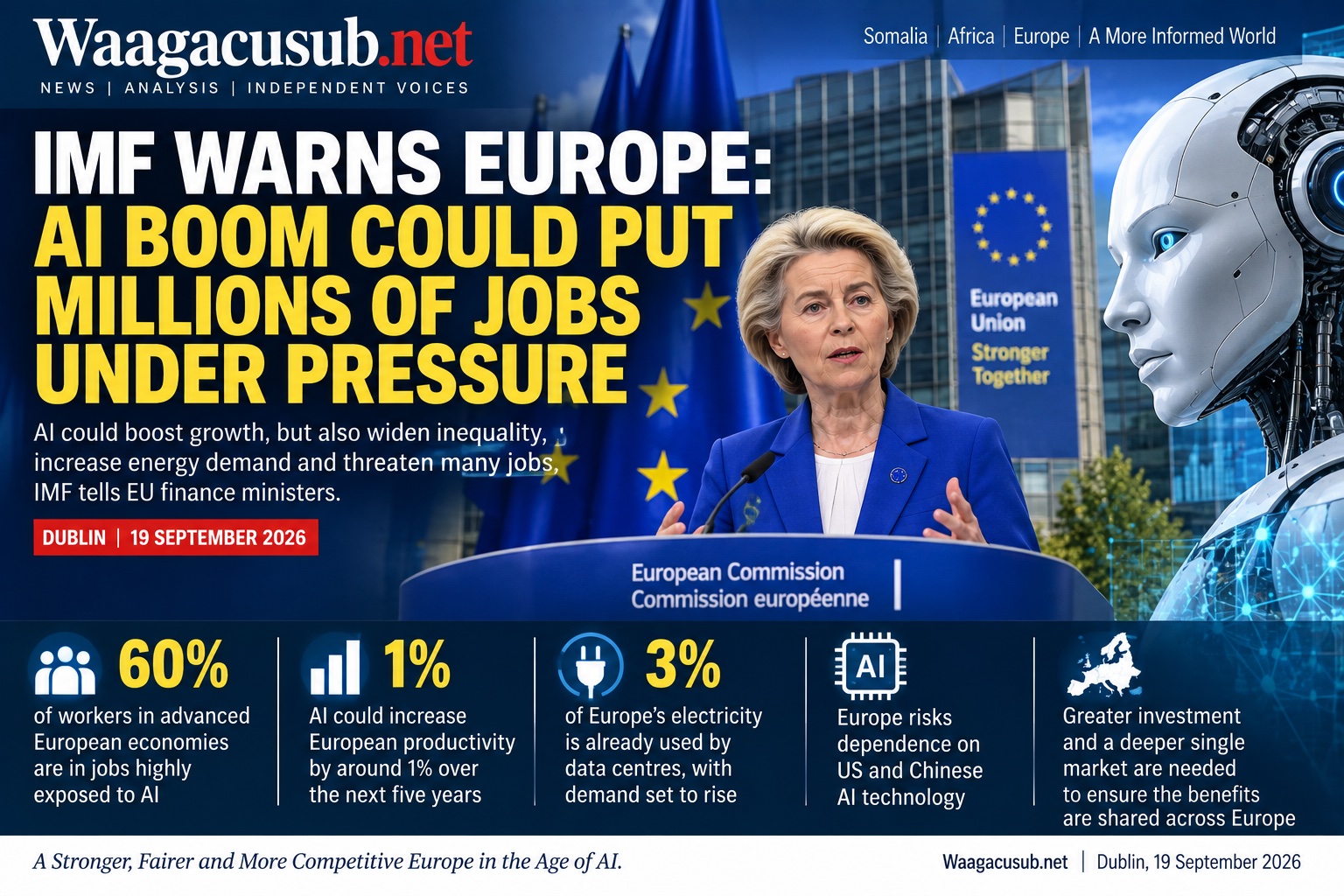
DUBLIN (Waagacusub.net) — The International Monetary Fund has warned European policymakers that the rapid expansion of artificial intelligence could boost economic productivity while also disrupting labour markets, widening inequality, straining electricity networks and increasing Europe's dependence on foreign technology.
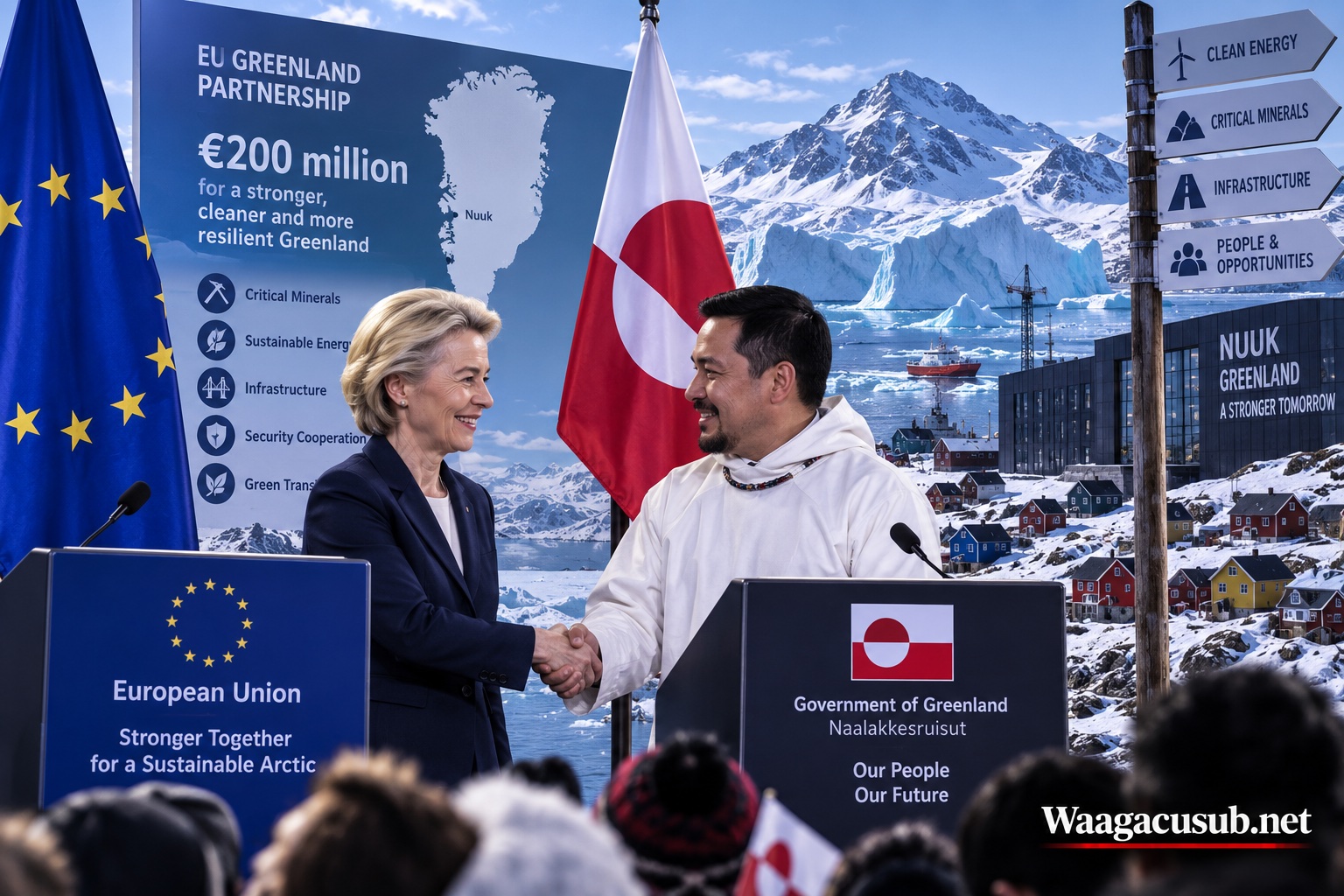
The European Union is dramatically expanding its economic and strategic engagement with Greenland, committing another €200 million as the Arctic island becomes an increasingly important arena of competition over security, critical minerals, infrastructure and geopolitical influence.
MOGADISHU / MINNEAPOLIS — Somali rapper Sharmarke Abdinasir Mohamed, widely known as Sharma Boy, is facing renewed scrutiny following allegations that he used threats, blackmail and sustained pressure to obtain thousands of dollars from a Somali-American woman in the United States.
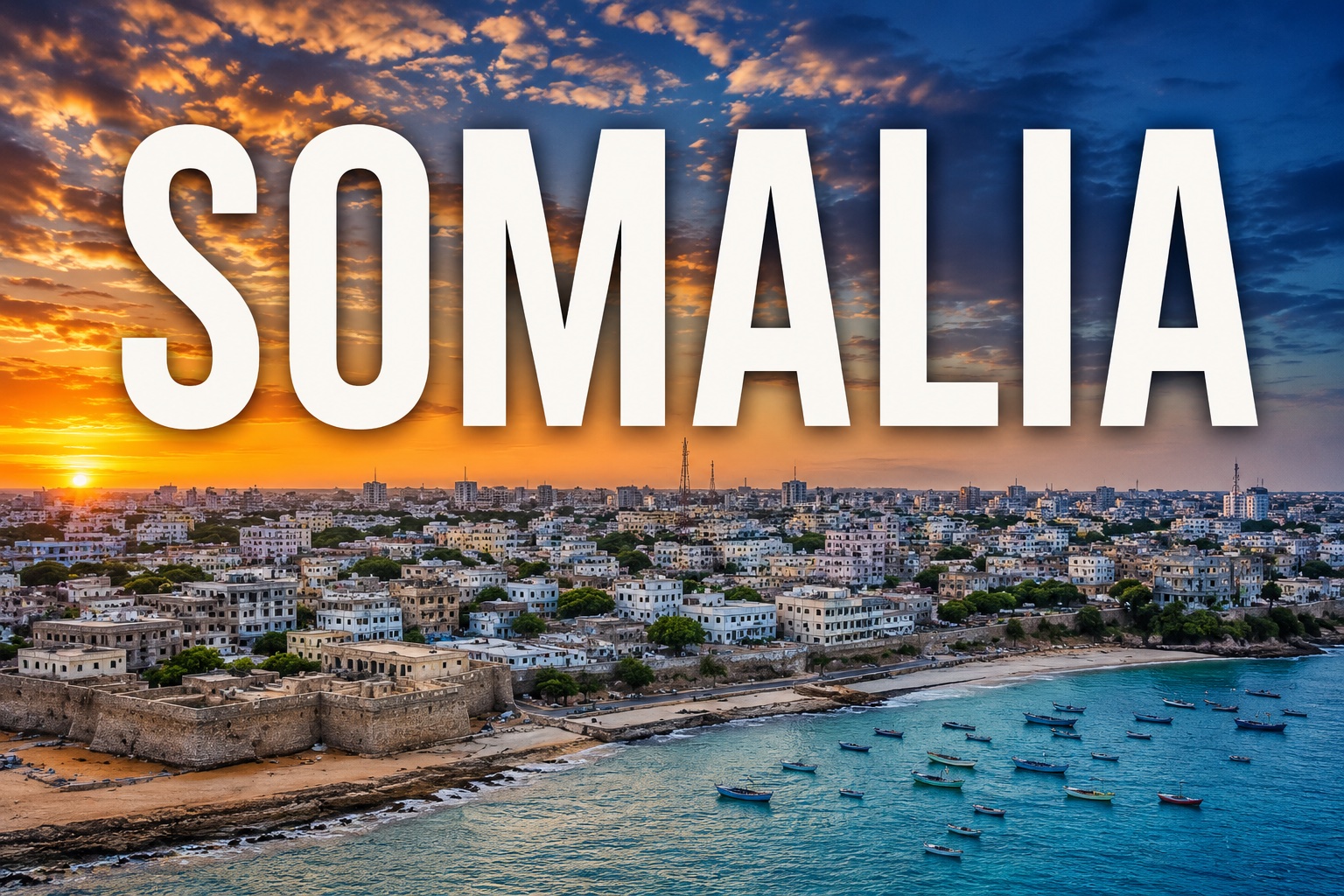
MOGADISHU — Concerns are growing among Somali intellectuals, civil society organizations, retired military officers, and democracy advocates that Somalia is entering a dangerous period of political instability marked by increasing militarization and shrinking space for democratic participation. The concerns come amid escalating confrontations in Mogadishu and reports of civilian casualties, displacement, and destruction resulting from recent clashes between government forces and opposition-aligned groups.
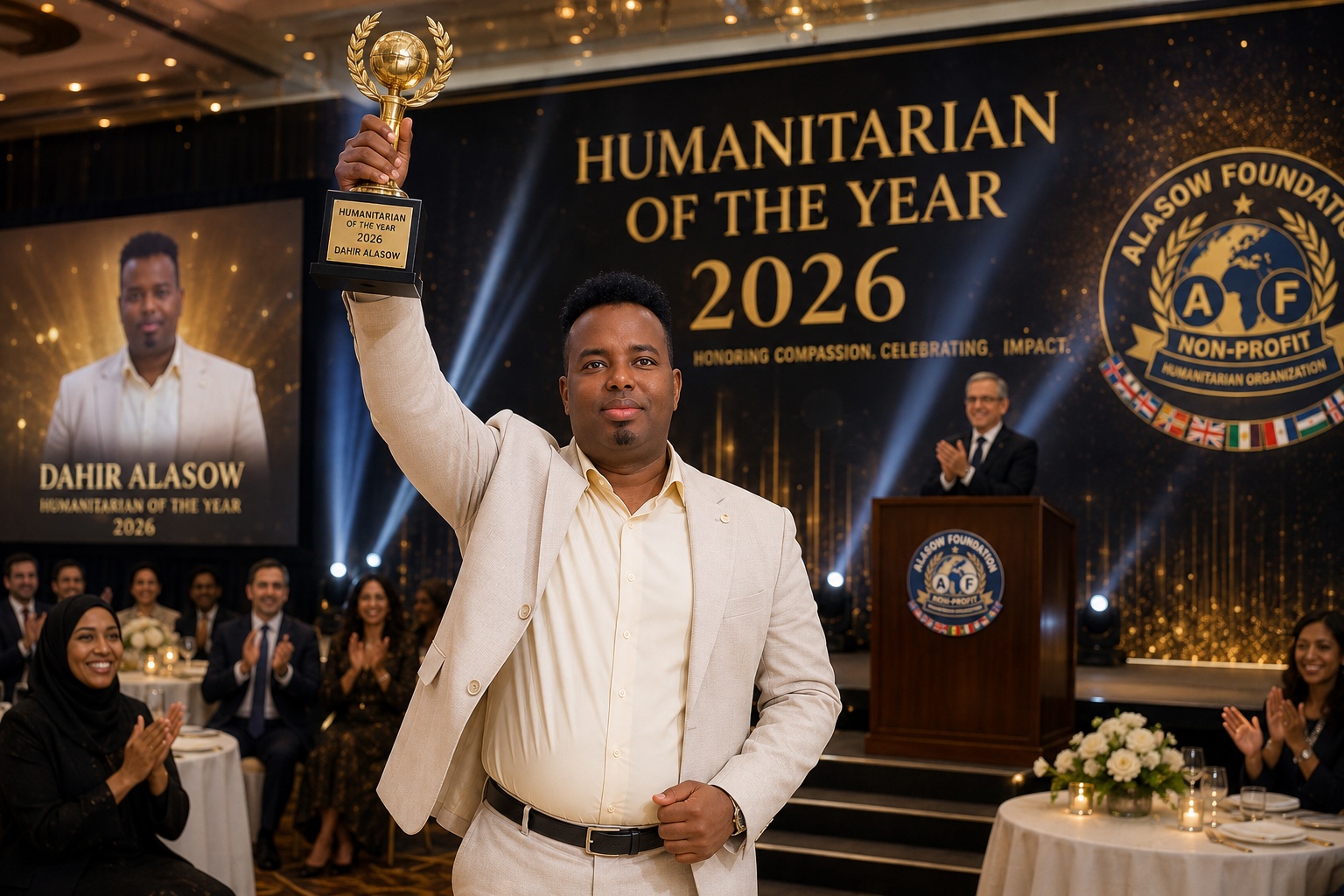
Prominent Somali investigative journalist and philanthropist Dahir Abdulle Alasow has been honored with the prestigious Humanitarian of the Year 2026 Award, recognizing his growing humanitarian impact through the international charity organization Alasow Foundation.




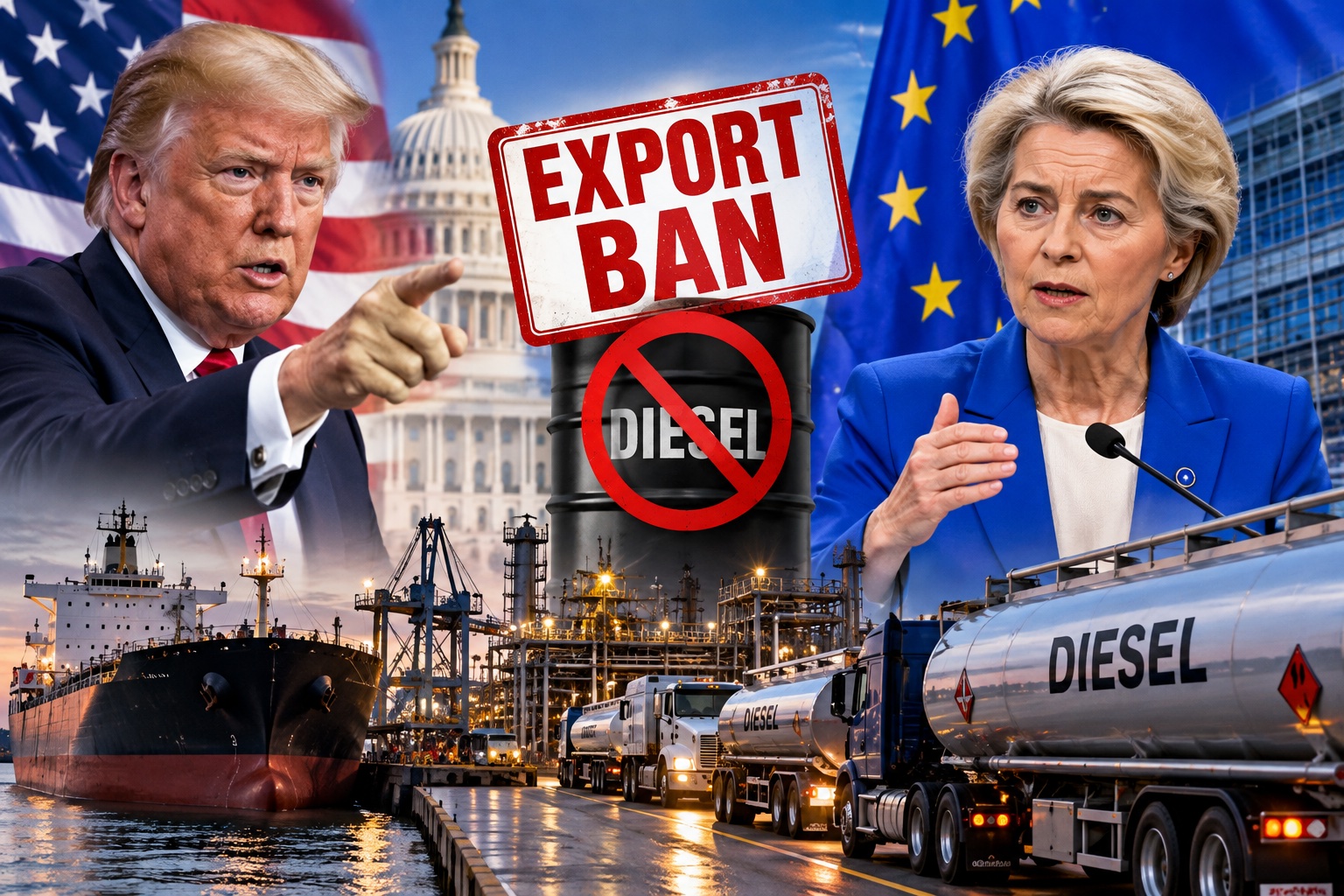
The European Union has expressed concern over reported plans by the United States to temporarily restrict diesel exports, warning that such a move could have economic consequences on both sides of the Atlantic at a time when Europe is already facing elevated energy costs. Full Article
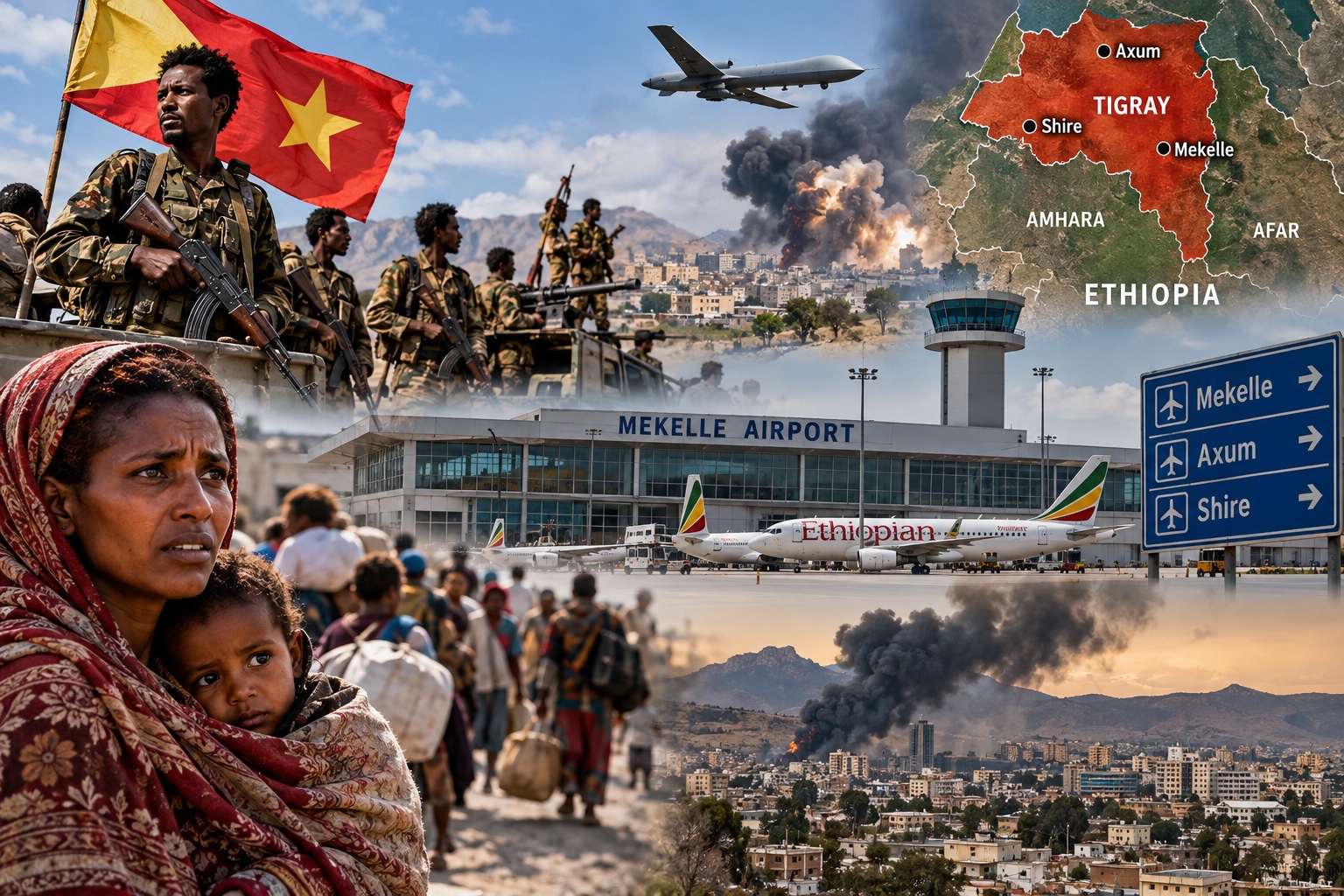
Ethiopia is confronting its most dangerous northern military escalation since the 2022 Pretoria peace agreement, as renewed fighting spreads across Tigray, Amhara and Afar and raises fears that a country still carrying the scars of its last devastating war could be sliding toward another major conflict. Full Article
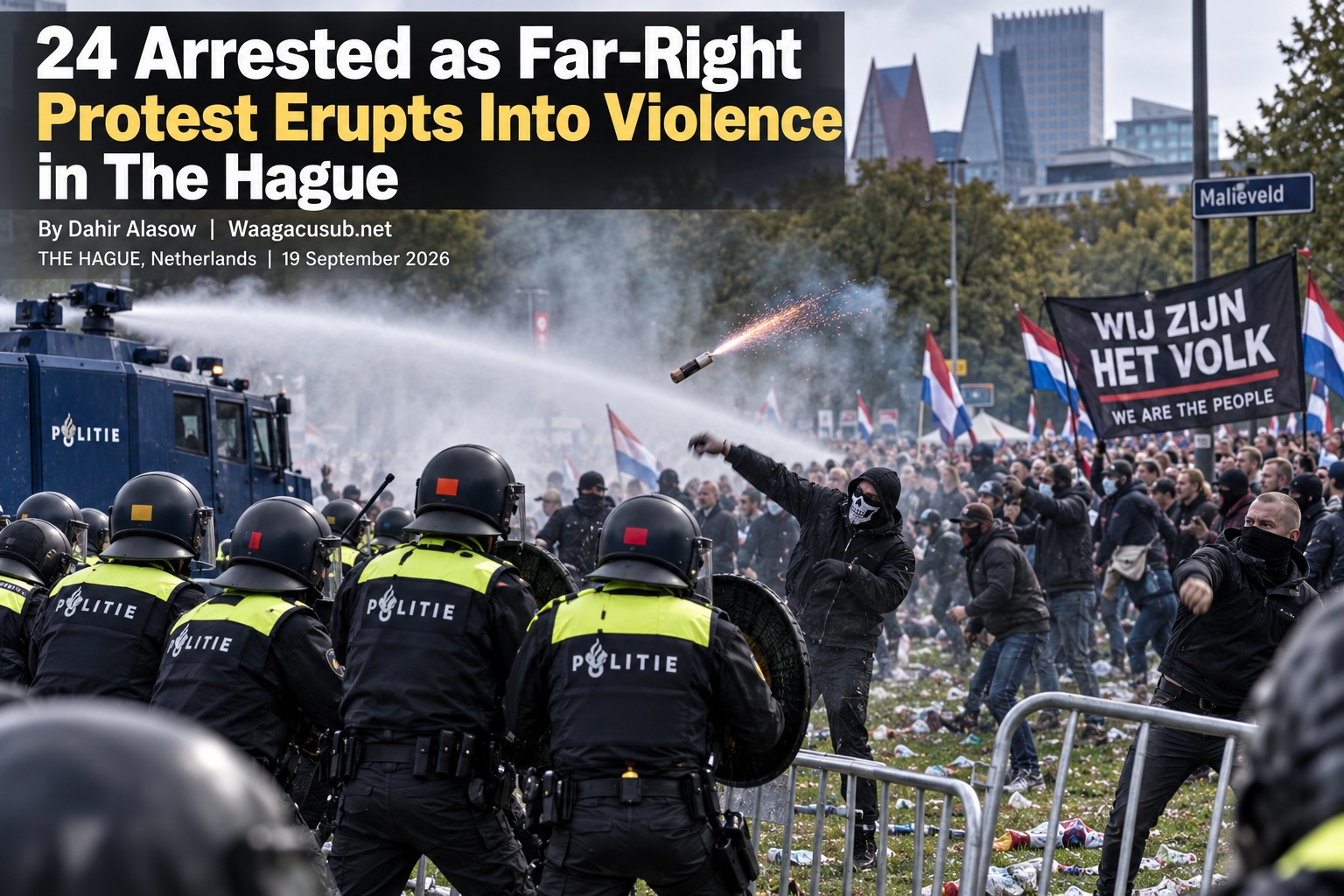
Dutch riot police arrested 24 people on Saturday after a demonstration in The Hague descended into violence, with protesters throwing fireworks and other objects at police officers. Full Article
DUBLIN (Waagacusub.net) — The International Monetary Fund has warned European policymakers that the rapid expansion of artificial intelligence could boost economic productivity while also disrupting labour markets, widening inequality, straining electricity networks and increasing Europe's dependence on foreign technology. Full Article

BRUSSELS (Waagacusub.net) — The European Union has opened the door to an unprecedented new relationship with Canada, with European Commission President Ursula von der Leyen proposing that the country become the bloc's first-ever "associate member." The proposal, announced on September 16, could significantly deepen cooperation between Canada and the 27-member European Union in defence, energy, critical minerals, artificial intelligence and digital trade. Full Article

Hormuud's Assault on African Peacekeepers Figure 14: African Peace Keepers Hormuud launched a scorching public campaign against the Kenyan military forces in AMISOM in late August 2019. Full Article
Former Intel official stripped from NISA membership Full Article
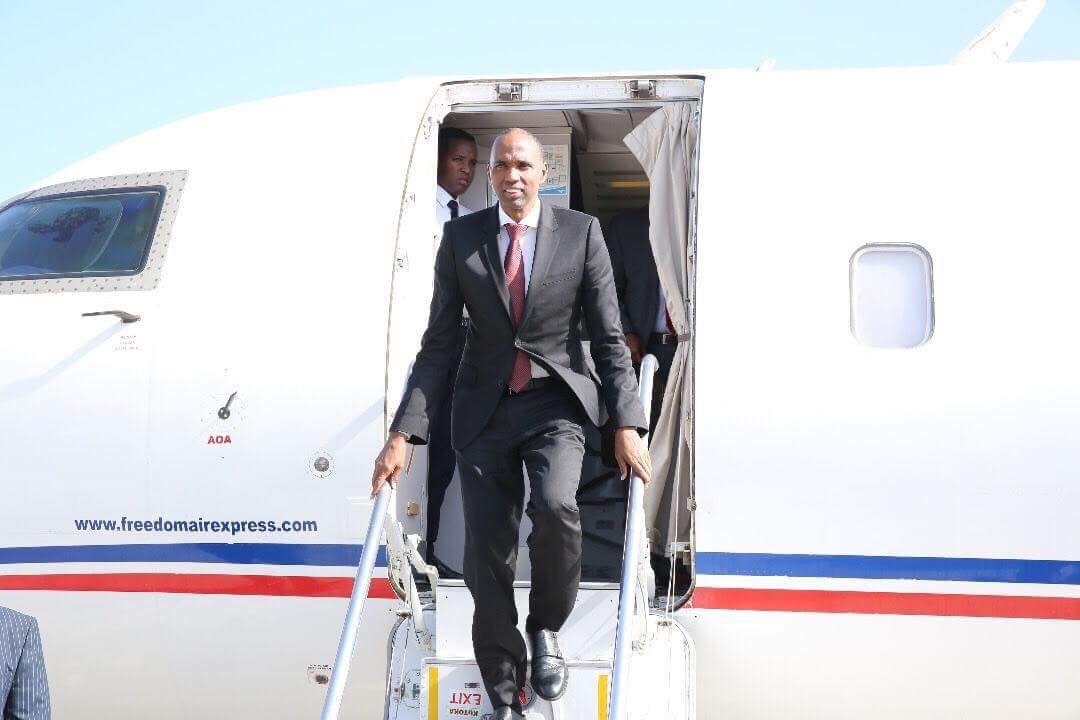
PM KHEYRE USELESS AND COSTY OVERSEAS TRIPS. Full Article
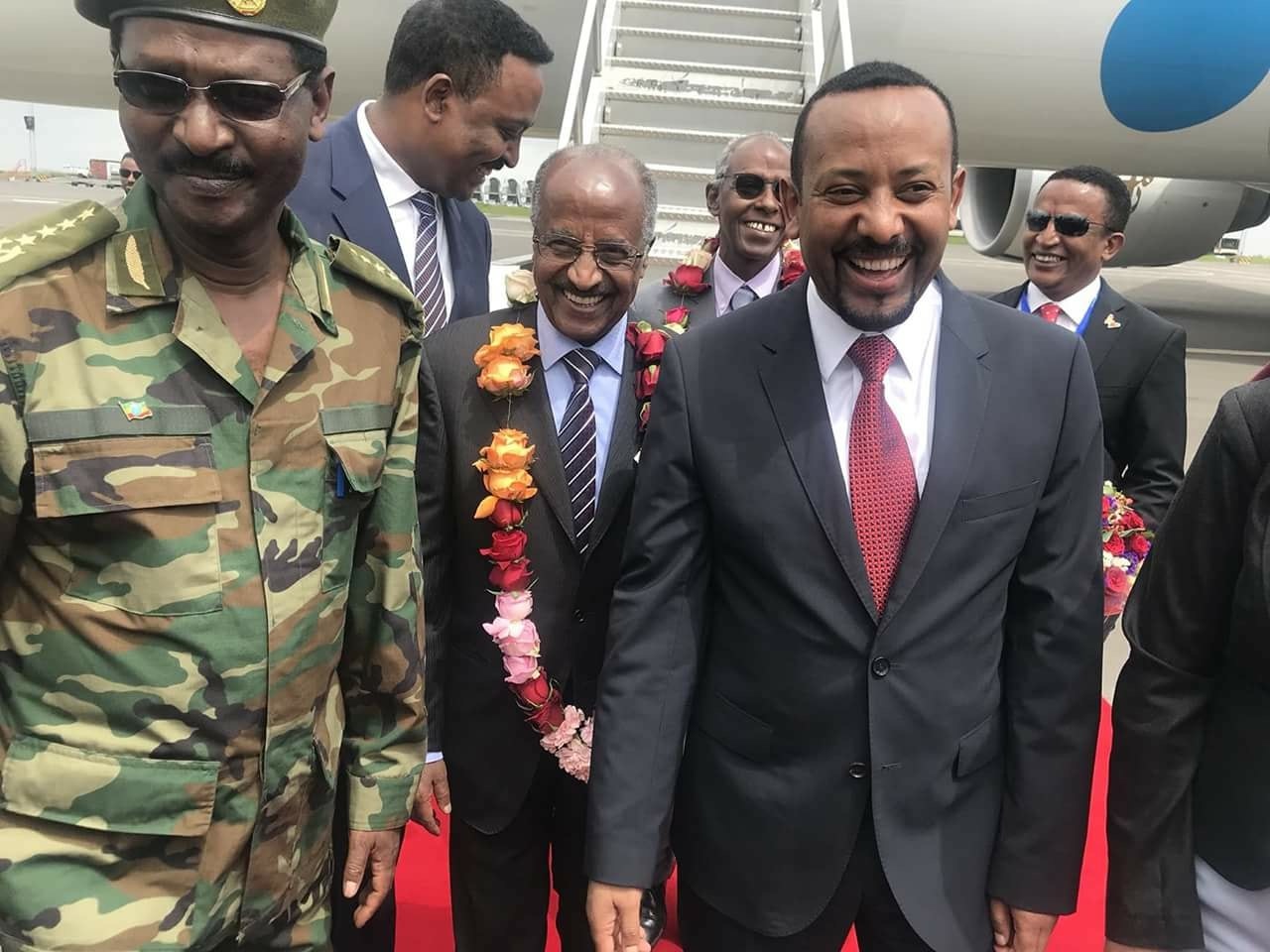
Abiy says 'New Year' will be celebrated in Eritrea, Ethiopian Airlines to resume flights Full Article
Massive rise in Islamist militant attacks in Africa Full Article


Ethiopia's Bloody Crackdown: The Case for International Justice By Felix Horne
Ethiopian security forces gunned down at least 100 people a week ago in the bloodiest weekend in the ninth month of anti-government protests. Unlike previous protests, which have been largely confined to the Oromia region, the protests on August 6 an