

 0
0


The persistent leaks of Cabinet change and the repeated allegations of corruption and sectarian politics from relentless critics have contaminated the public optimism, fuelled perception of power abuses, forced the abandoning of the six pillars policy and the national stabilization plan, and prevented the direct international engagement with the internationally recognized national government. In consideration of the monumental tasks assigned to the national government, the walking away of the international donors from direct engagement with the national government and shifting to direct relations with local entities - Somaliland, Puntland, Jubbaland, Bayland, and Mogadishuland- is a serious setback for statebuilding, peacebuilding, national unity, economic recovery, and national election in 2016.
Without considering all accusations trustworthy, it is likely that the allegations in the UN Monitoring Group’s Report (S/2013/413) of July 24, 2013, reiterated and amplified in the reportof the Center for Strategic and International Studies (CSIS) published in August 2013, then personalized in the resignation letter of the former Governor of the Central Bank of Somalia Yussur Abrar of October 30, have contributed to the decision of the European Union (EU) not to channel any money to the federal government. On November 27, 2013, in response to a statement of the Deputy Prime Minister and Minister of Foreign Affairs of the Government of Somalia, Fawzia Yusuf Aden that "Somalia had received nothing from the European Union only promises” Andris Piebalgs, the EU Commissioner for Development, said, "She is right we don’t channel any money to federal government but that’s because in order to use that you need public finance management and an accountability system and today that’s not the case.” The EU manages the 2.4 billion dollars aid pledged to the federal government of Somalia for 2014-2016.
The news of the clash between President Hassan and Prime Minister Shirdon has shocked the public because it breached the solemn commitment made jointly by the Somali top three leaders soon after taking office that the past political infightings which paralyzed former transitional governments will never happen among them. President Hassan did not talk about the rift before the parliament delivered the no confidence vote. The resolution of this political face-off which stirred friction in the parliament, regional authorities, and the public, could offer an opportunity for recovery or could just be a trap for more complications to come.
However, there is a paradox that puzzles many observers. The paradox relates to how to reconcile the repeated claims of major achievements of the federal government with the charges of corruption and incompetence against the Council of Ministers responsible for the formulation and implementation of the federal government policies and programs. In addition, the Special Representative of the UN Secretary General, Nicholas Key said in statement released after the no confidence vote of the parliament, "Somalia’s institutions are coming of age.The UN is here to support their development, and looks forward to working constructively with the new administration. Outgoing Prime Minister Shirdon had worked hard to promote growth and progress and played an important part in creating the New Deal Compact between international partners and Somalia.”This kind of Machiavellian politics undercuts the public trust in government, politics and international efforts.
The media and the public seem confused about the scope of the no confidence vote of the Prime Minister for incompetence. Article 97 (1,2) of the Constitution stipulates that the Council of Ministers chaired by the Prime Minister collectively exercises the executive power, which means it is collectively responsible and accountable to the citizens, parliament, president, and judiciary. That is why many ordinary citizens were surprised about ministers lobbing for no confidence vote of the cabinet they were members. Article 99 lists the nine functions of the Council of Ministers, while Article 100 specifies the Prime Minister’ powers which includes representing the council of ministers and government programs before the federal parliament. Article 102 states clearly that every minister is personally responsible for the functions of his [her] Ministry. Therefore, the no confidence vote for incompetence applies to the Council of Ministers.
During the debate of the no confidence motion in the parliament, there were instances of incomprehension. First, contrary to articles 65 (3), 66 (3), and 68 (1, 5) of the provisional constitution, it appeared that the parliament did not have established procedures for its normal workings like the neutral role of the speaker and his deputies, the duration of the sessions, the time management, the required procedures that allow each member of parliament full participation, the absolute transparency of meetings and debates. Second, the rejection of Prime Minister’s request to respond to the allegations in the no confidence motion in parliament was an astonishing decision which breached the constitution. Third, the attendance of the parliament leadership at a celebration party for ousting the council of ministers was improper. As per articles 61 (1) and 70 (5), the parliamentarians are supposed to be guided by the best interests of the nation as a whole because they are paid directly from the national treasury.
The parliament has oversight responsibility over the executive branch, a relationship that should avoid dispute between the president and the council of ministers. The parliamentary scrutiny and hearings on government’s performance for explanations, justifications and corrections would help to create public confidence in government and avert unwarranted no confidence motions.
Also, some commentators have mistakenly attributed the source of the frequent clashes between Somali leaders to the provisional constitution and to the parliamentary system of governance. But I argue here that the constitution isn’t to blame for the Somali leaders falling-out. Generally, the conflict arises from the deliberate unwillingness to adhere and respect to the letter and spirit of the constitution in the execution of the public services. The constitutional document which transforms and regulates the individual and societal behavior has effect and meaning when the stakeholders/power holders respect it faithfully. But if the power holders decide to twist the constitution to their desires and interpretations and the society fails to resist democratically and strenuously, then the constitution loses relevance and raison d'être.
Clearly, the constitution provides the necessary checks and balances needed in the political system of Somalia. The powers and responsibilities of the four equal branches of the government-Parliament, Presidency, council of Ministers and judiciary- are interlocked and interdependent. Each institution must remain within the limits of its jurisdiction.
The president is not a ceremonial leader. If the constitution guides, then the government works fine but if there is no respect for the rule of law, then chaos, corruption, abuse of power, and failures will be the norm. Articles 66 (4{a}), 64 (4), 85, 87 (1-a, b, c 2), article 90 (a-q), list the responsibilities and powers of the president who must consent all governmental activities through the application of the rule of the law. The mixed parliamentary and presidential political system is good for the Somali society on the condition that the Somali intellectuals, civil society activists, and politicians put together the best processes and practices for the implementation of the adopted system.
The defunct United Nations Political Office for Somalia (UNPOS) and former leaders of the Transitional Federal Government, particularly the minister for constitutional affairs, principal actors in the constitution making process, have let down the Somali people by not even proof reading the constitutional document. Nevertheless, with the exception of the deadlocked idea of clan based federalism entrusted to the parliament for review, study, debate and legislation, the provisional constitution provides reasonable guidelines on other important questions related to the definition of the republic of Somalia, the supremacy of the provisional constitution, the fundamental rights and duties of the citizens, representation of the people, the functioning of the federal parliament, the president, the executive branch, and the judiciary. The parliament responsible for enacting the laws necessary for the elimination of the blatant inconsistencies and contradictions in the constitution is in default and has to act quickly.
A caveat, one fundamental political flaw which contributes to the dysfunction of the parliament and the whole government is the disconnect between the composition of the federal parliament and the limited operational area, responsibility, and influence of the federal government. The people/territory under the vagaries of the federal government is shortchanged. A quick action is needed to protect the interests of these people.
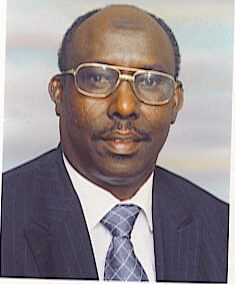
Mr. Mohamud M Uluso
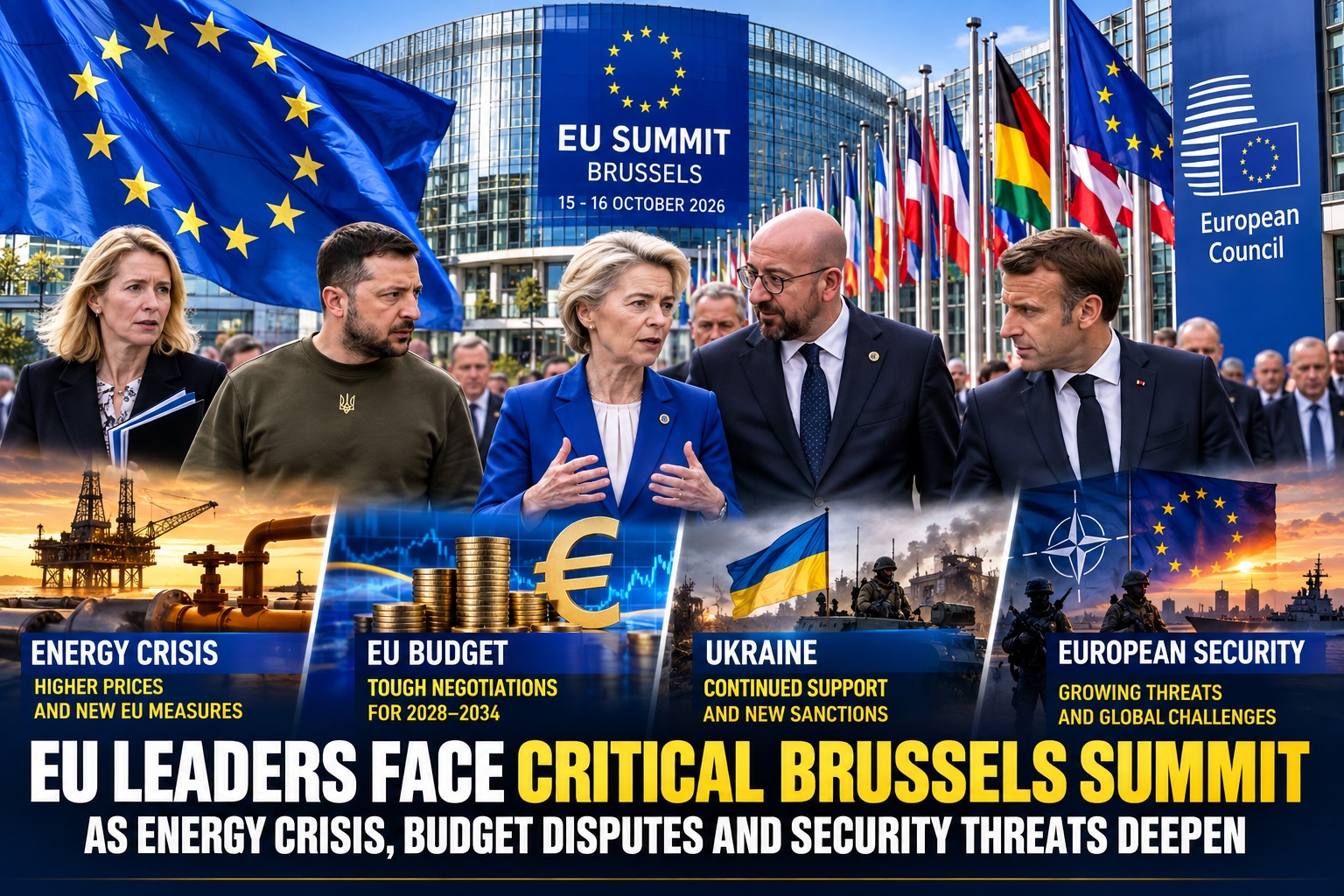
European Union leaders prepare for high-stakes negotiations on soaring energy prices, a controversial long-term budget, support for Ukraine and Europe's economic future. Full Article
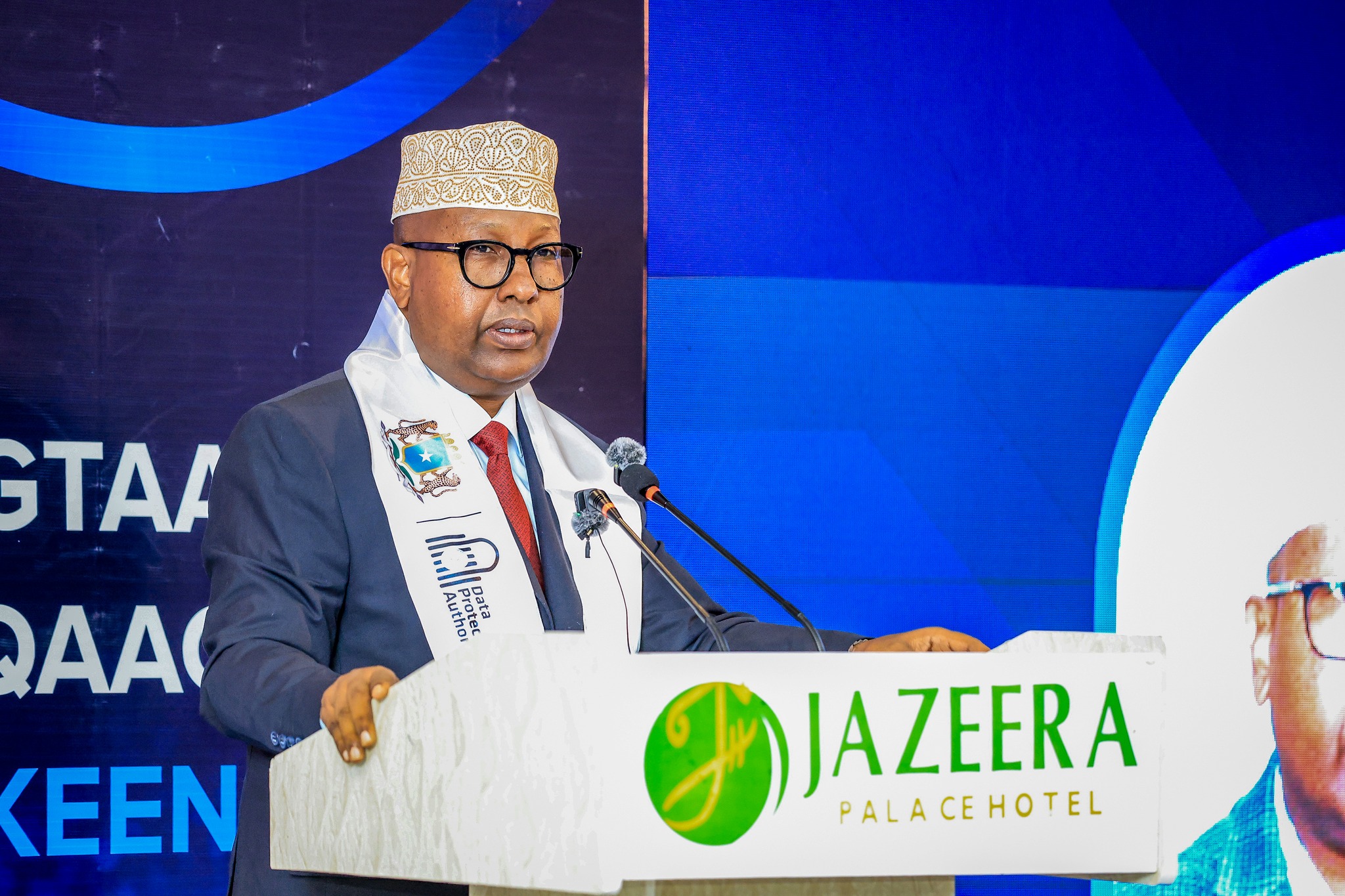
MOGADISHU, Somalia — Somalia's Defense Minister Ahmed Moalim Fiqi has sparked outrage after issuing strong threats against opposition leaders planning anti-government demonstrations in Mogadishu, warning that security forces would respond forcefully to any protests challenging the federal government. Full Article
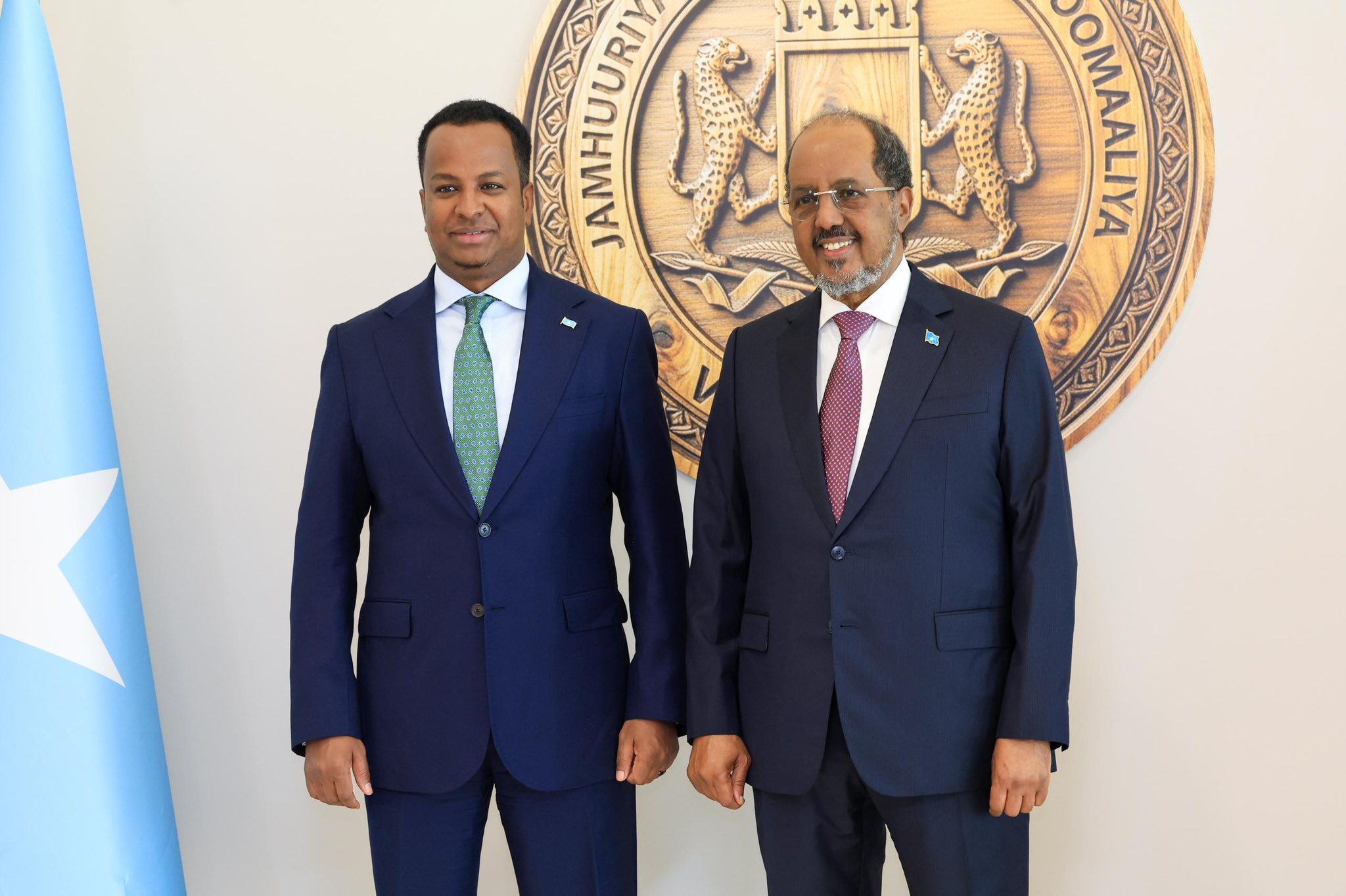
Somalia's Foreign Minister Abdisalam Omer Dhaay has quickly become one of the most promising and effective young diplomats to emerge in recent years. In a political landscape too often dominated by internal disputes and inconsistent foreign policy, Dhaay stands out for his professionalism, clarity, and modern diplomatic approach. Full Article

The First Grade Court of Mudug Region in Gaalkacyo has issued an order mandating the immediate court appearance of two defendants: Hodan Maxamud Diiriye (34) and Cabdicaasiis Nuur Xaashi Calas (65). Both individuals are accused in a case filed by complainant Marxuumad Saabiriin Saylaan Cabdille Wees & DPL and her family. Full Article

As Galmudug prepares for a decisive state leadership contest, Liban Ahmed has emerged as a powerful consensus candidate with broad support from influential community and political blocs across the region. His candidacy is gaining momentum among Galmudug's 11 clans, many of whom describe his rise as the result of consultation rather than confrontation. Community elders, youth groups, women's organisations, and local political actors in several districts say Liban represents a stabilizing choice at a politically sensitive moment. Many describe him as a neutral figure capable of balancing competing interests in a landscape where political alliances often shift rapidly. Full Article
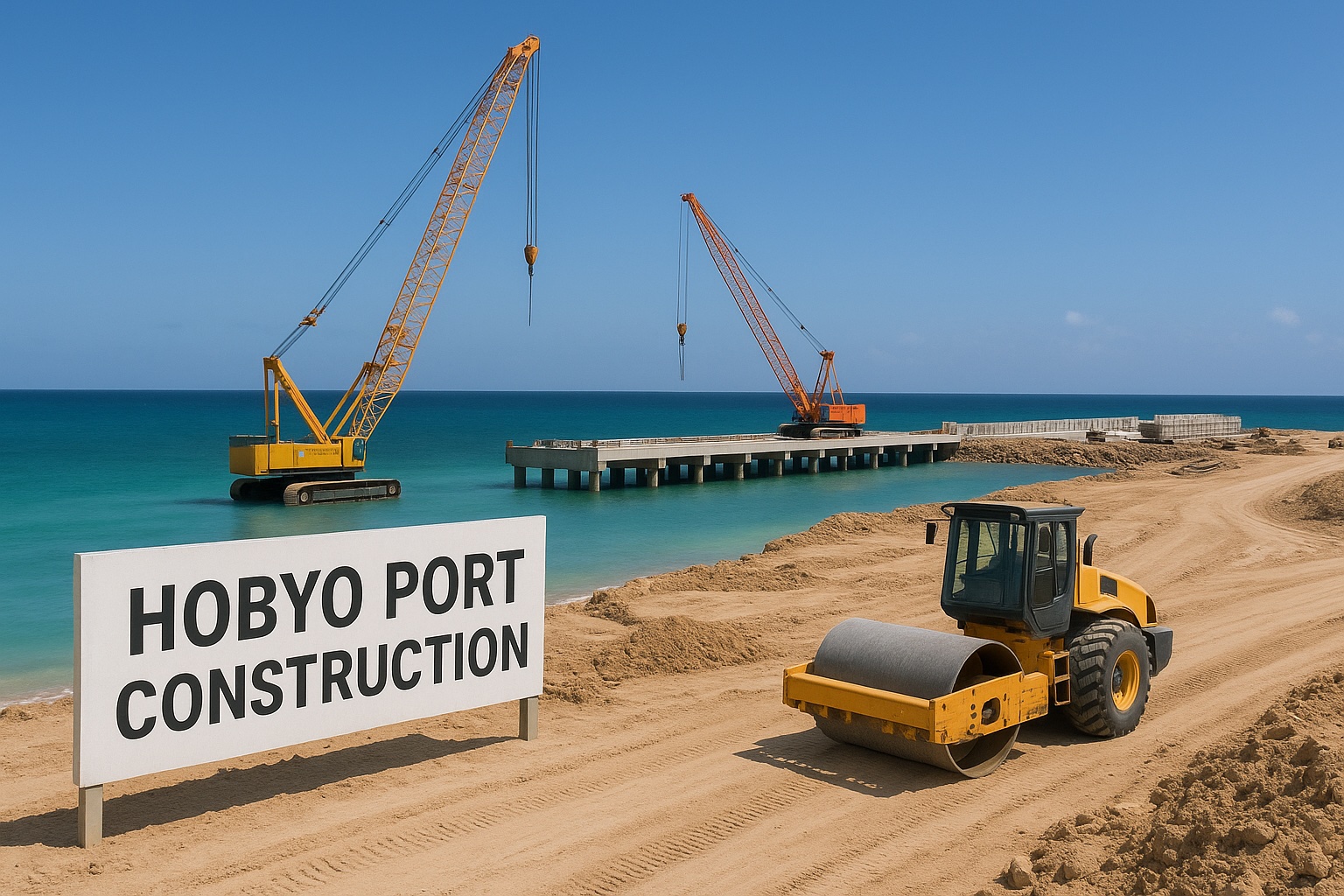
Hobyo, Galmudug The long-anticipated construction of Hobyo Port has officially commenced, marking a major step forward for trade, investment, and maritime infrastructure in Galmudug State and Somalia at large. The project is being executed by a prominent Turkish construction company, whose team of experienced engineers has arrived in Hobyo to oversee and lead the implementation of the port development. Full Article
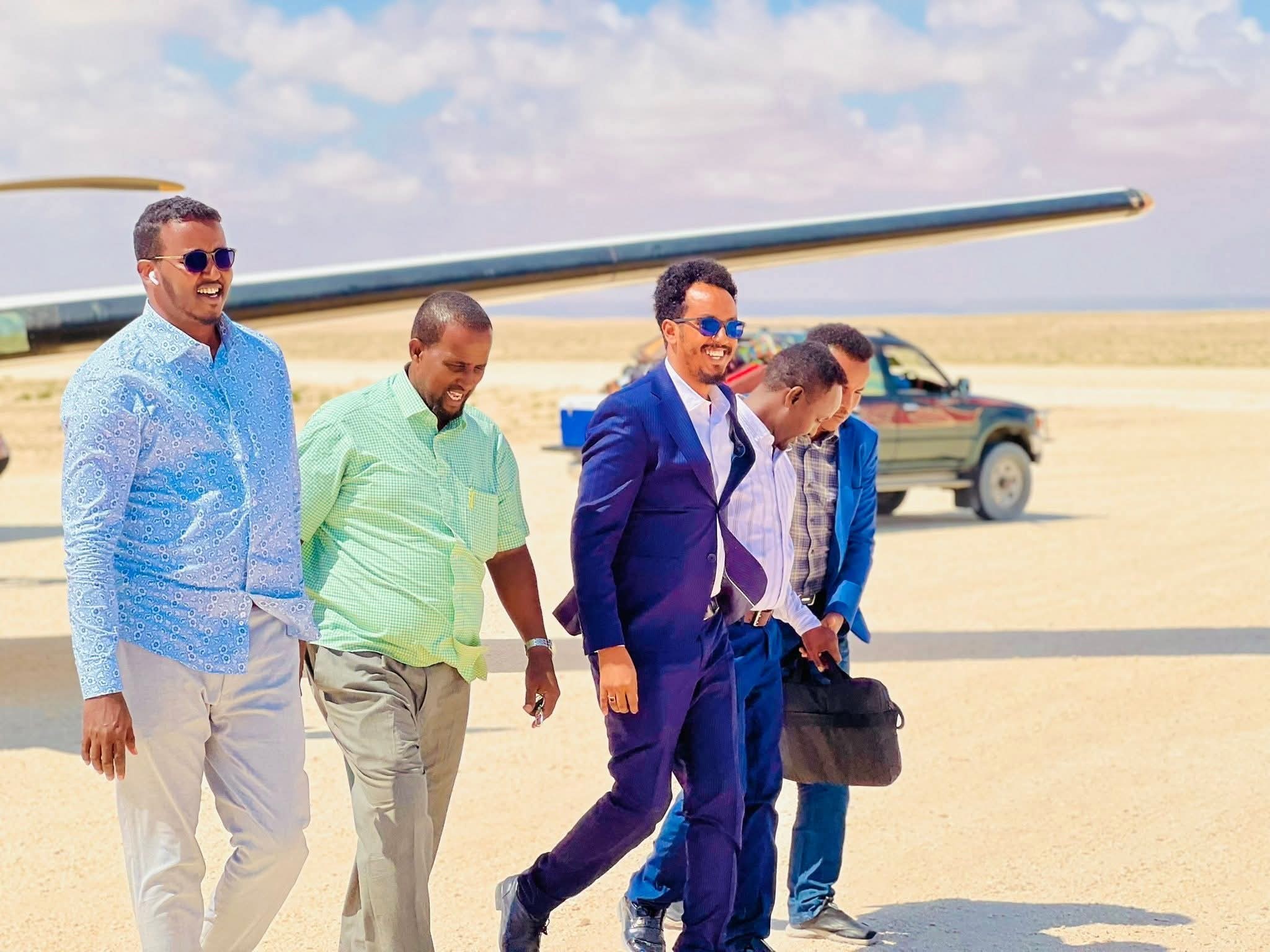
Hobyo, Mudug The Minister of Commerce of the Galmudug State Government, Abdi Jama Keyse, arrived today in the coastal city of Hobyo, Mudug region. His visit is part of ongoing efforts to strengthen trade and economic development in the region, particularly around the strategic Hobyo Port. Full Article

Tensions, celebrations, and disappointment have swept across Somali social media circles following the fiercely contested Minneapolis mayoral election, where the race took on deep clan and community undertones among the city's large Somali diaspora. Full Article
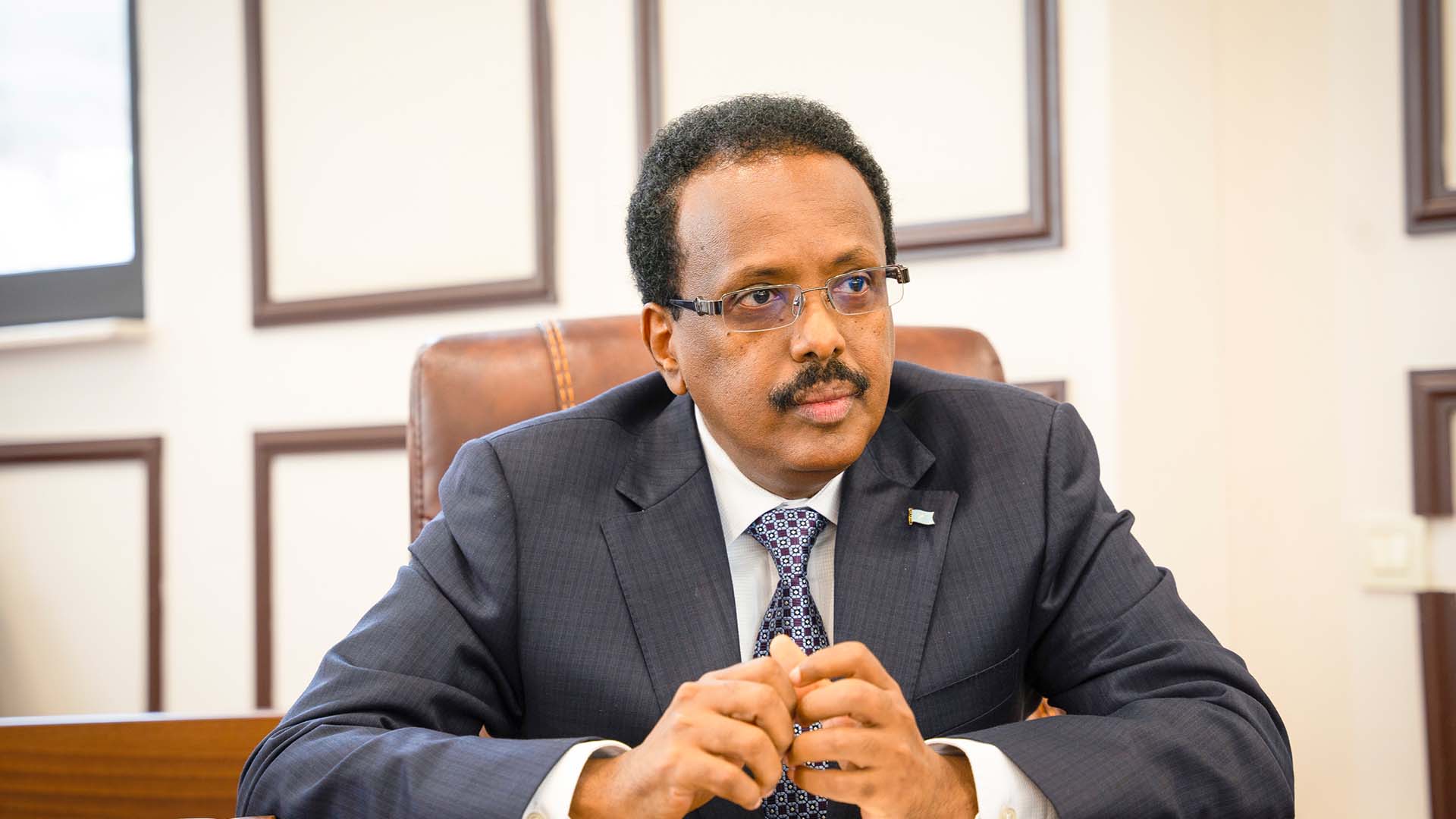
Waagacusub.net - Somalia's former President Mohamed Abdullahi Farmajo on Monday warned of the risk of political crisis over plans by the incumbent President Hassan Sheikh Mohamud to overhaul the constitution. Full Article
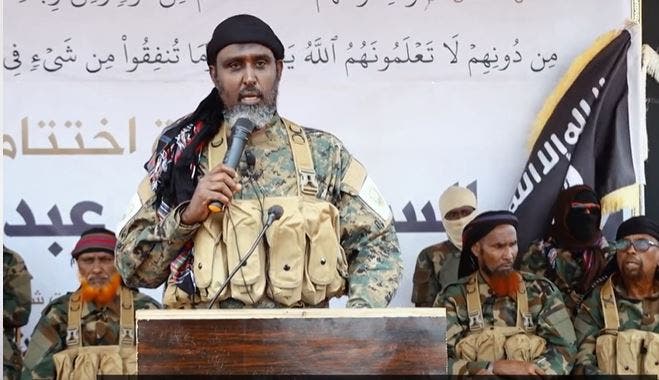
President HSM's Proclamation to Defeat Al-Shabab by Force in Somalia To overcome the complex problems of civil war, state fragility, and underdevelopment, the Somali people supported risky political changes for a government that promotes freedom, justice, peace, and prosperity in Somalia. For example, the Islamic movements enjoyed popular support to end the brutal reigns of warlords and the military occupation of Ethiopia and establish new government. Full Article
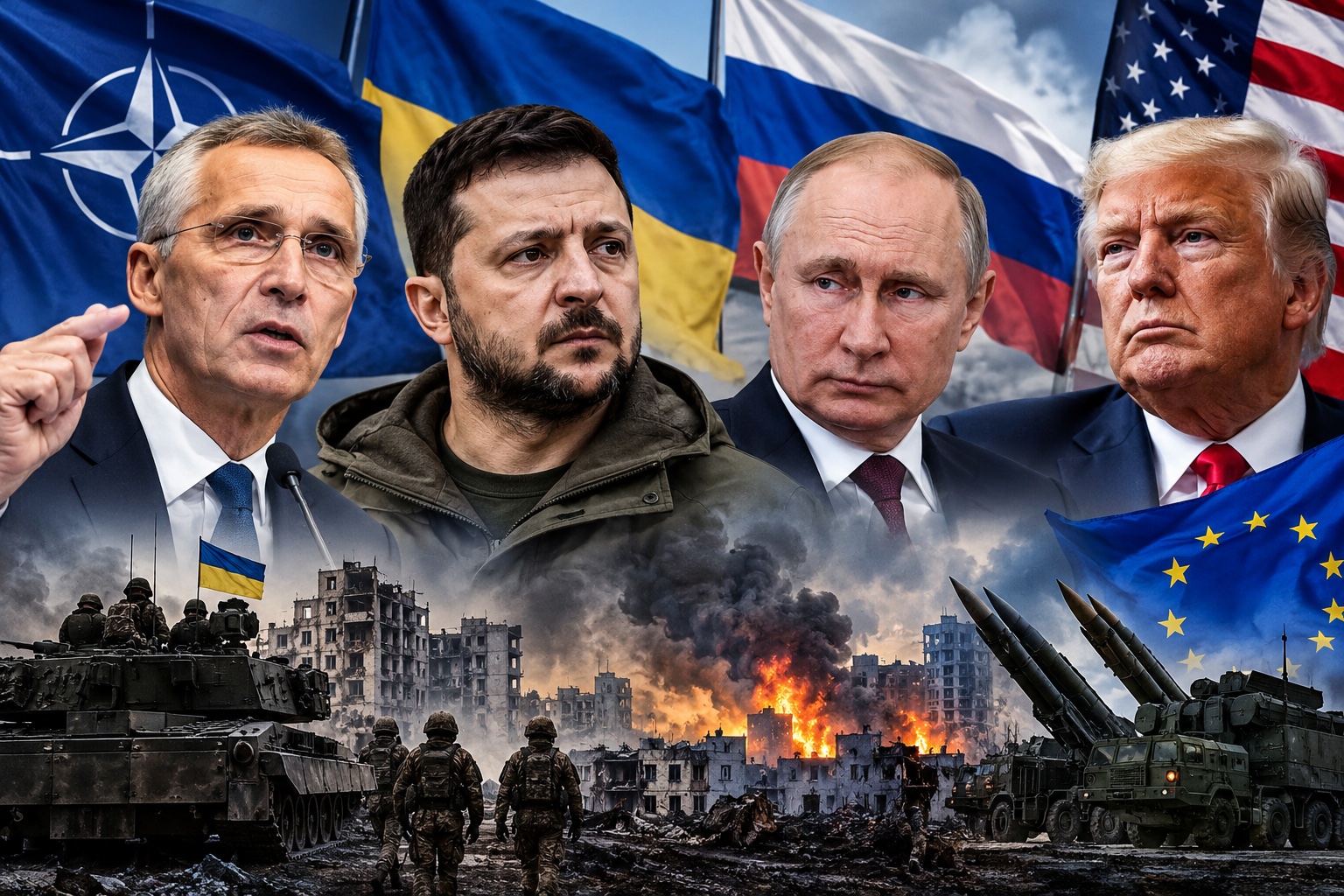
NATO declares its readiness to defend allied territory as the European Union targets nearly 1,600 Russian individuals and companies, while fresh attacks on Ukraine raise doubts about Washington's diplomatic efforts.
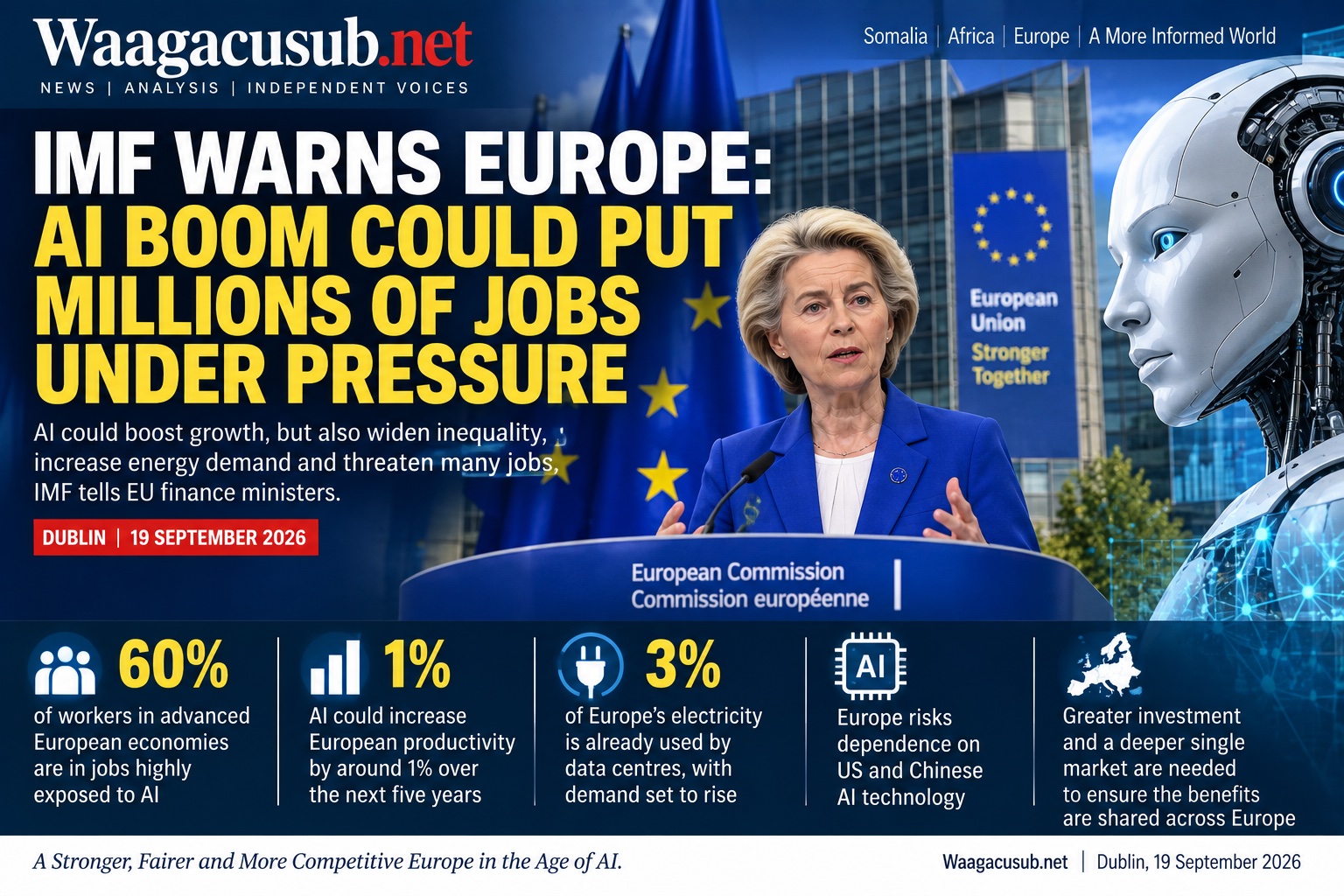
DUBLIN (Waagacusub.net) — The International Monetary Fund has warned European policymakers that the rapid expansion of artificial intelligence could boost economic productivity while also disrupting labour markets, widening inequality, straining electricity networks and increasing Europe's dependence on foreign technology.
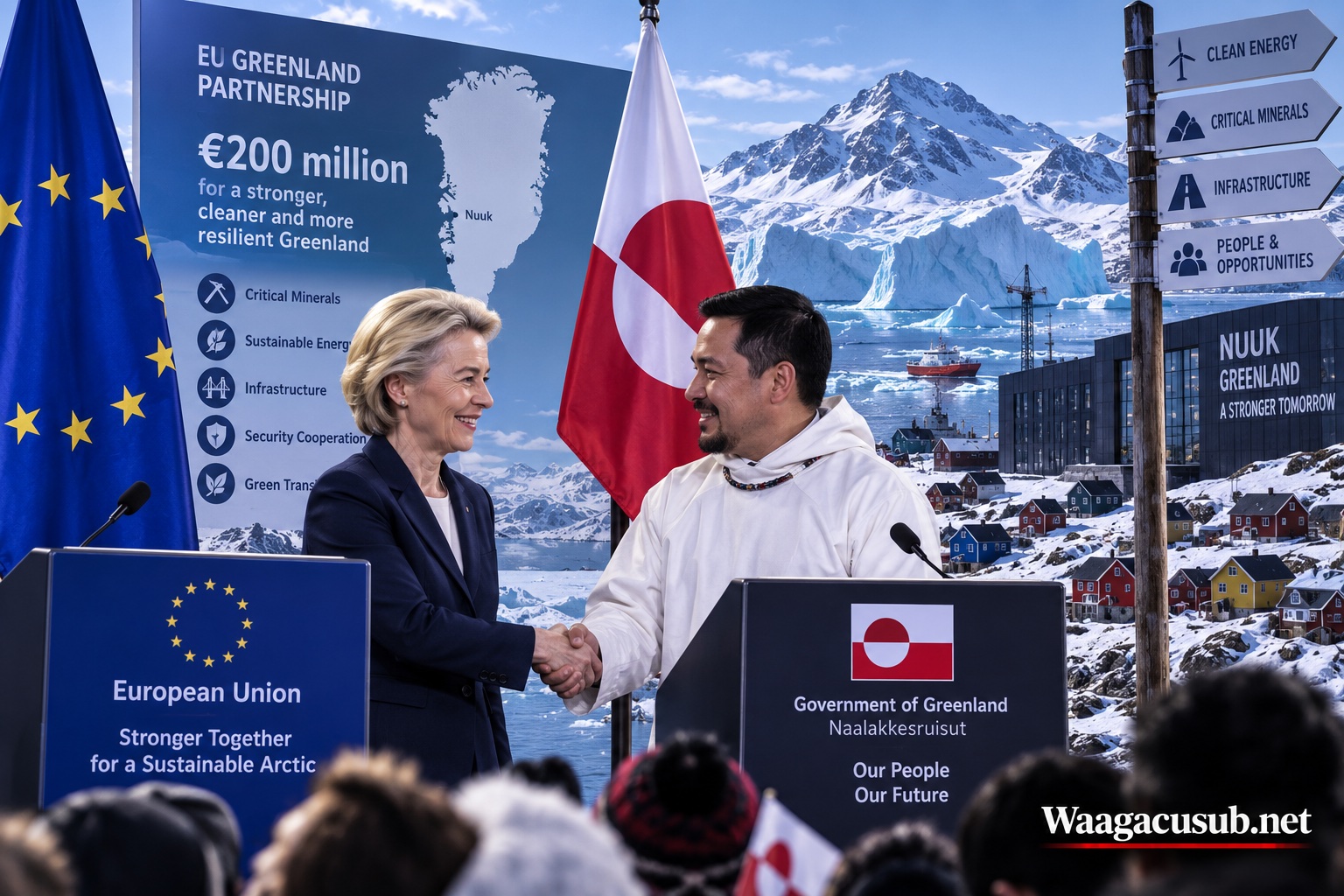
The European Union is dramatically expanding its economic and strategic engagement with Greenland, committing another €200 million as the Arctic island becomes an increasingly important arena of competition over security, critical minerals, infrastructure and geopolitical influence.
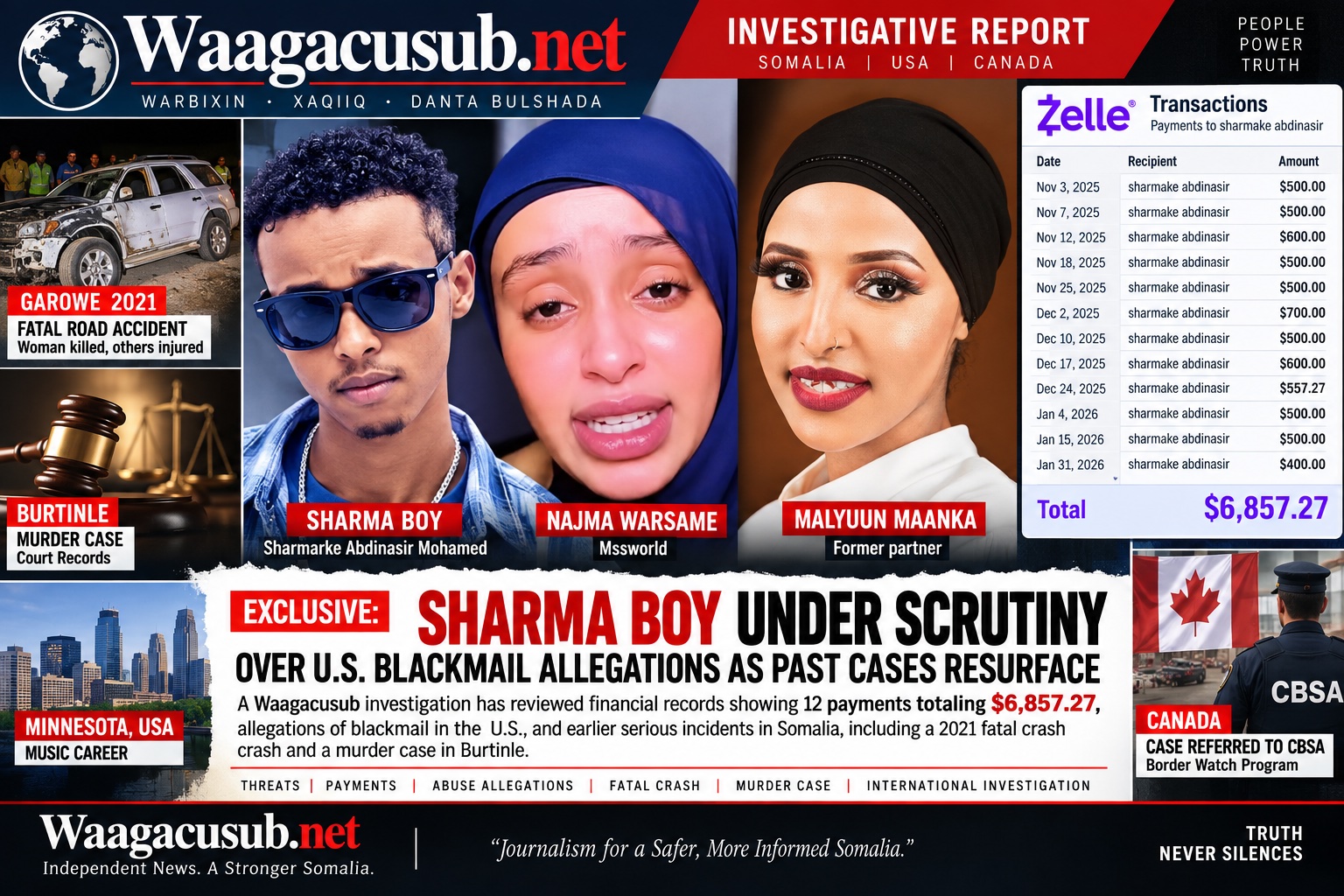
MOGADISHU / MINNEAPOLIS — Somali rapper Sharmarke Abdinasir Mohamed, widely known as Sharma Boy, is facing renewed scrutiny following allegations that he used threats, blackmail and sustained pressure to obtain thousands of dollars from a Somali-American woman in the United States.
MOGADISHU — Concerns are growing among Somali intellectuals, civil society organizations, retired military officers, and democracy advocates that Somalia is entering a dangerous period of political instability marked by increasing militarization and shrinking space for democratic participation. The concerns come amid escalating confrontations in Mogadishu and reports of civilian casualties, displacement, and destruction resulting from recent clashes between government forces and opposition-aligned groups.




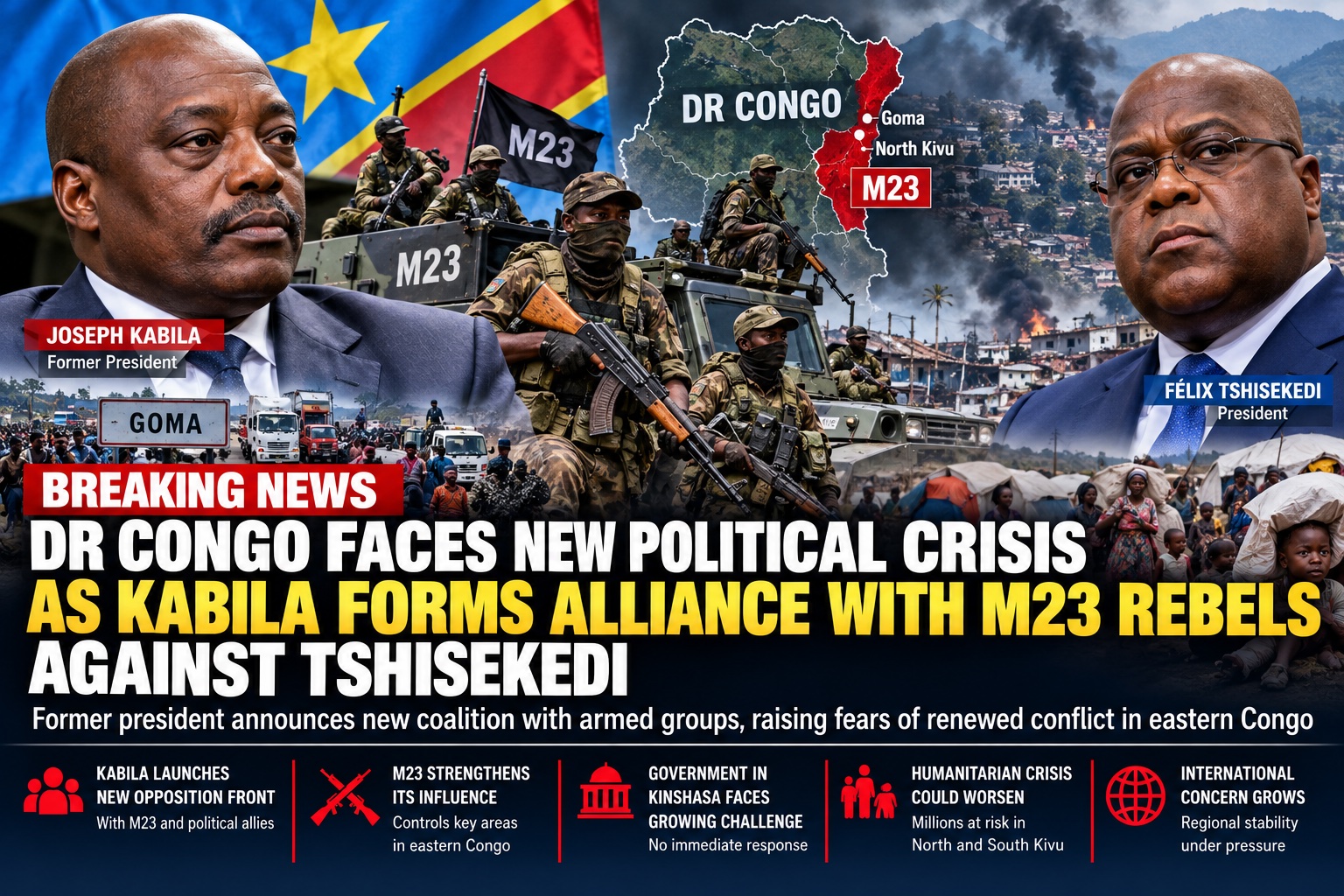
Former President Joseph Kabila announces a new opposition coalition involving armed groups, raising fears of renewed conflict and threatening fragile peace efforts in eastern Congo. GOMA, DEMOCRATIC REPUBLIC OF CONGO — October 13, 2026 The Democratic Republic of Congo is facing a potentially dangerous political and security confrontation after former President Joseph Kabila announced the creation of a new coalition bringing together political opponents and armed groups, including the powerful M23 rebel movement. Full Article
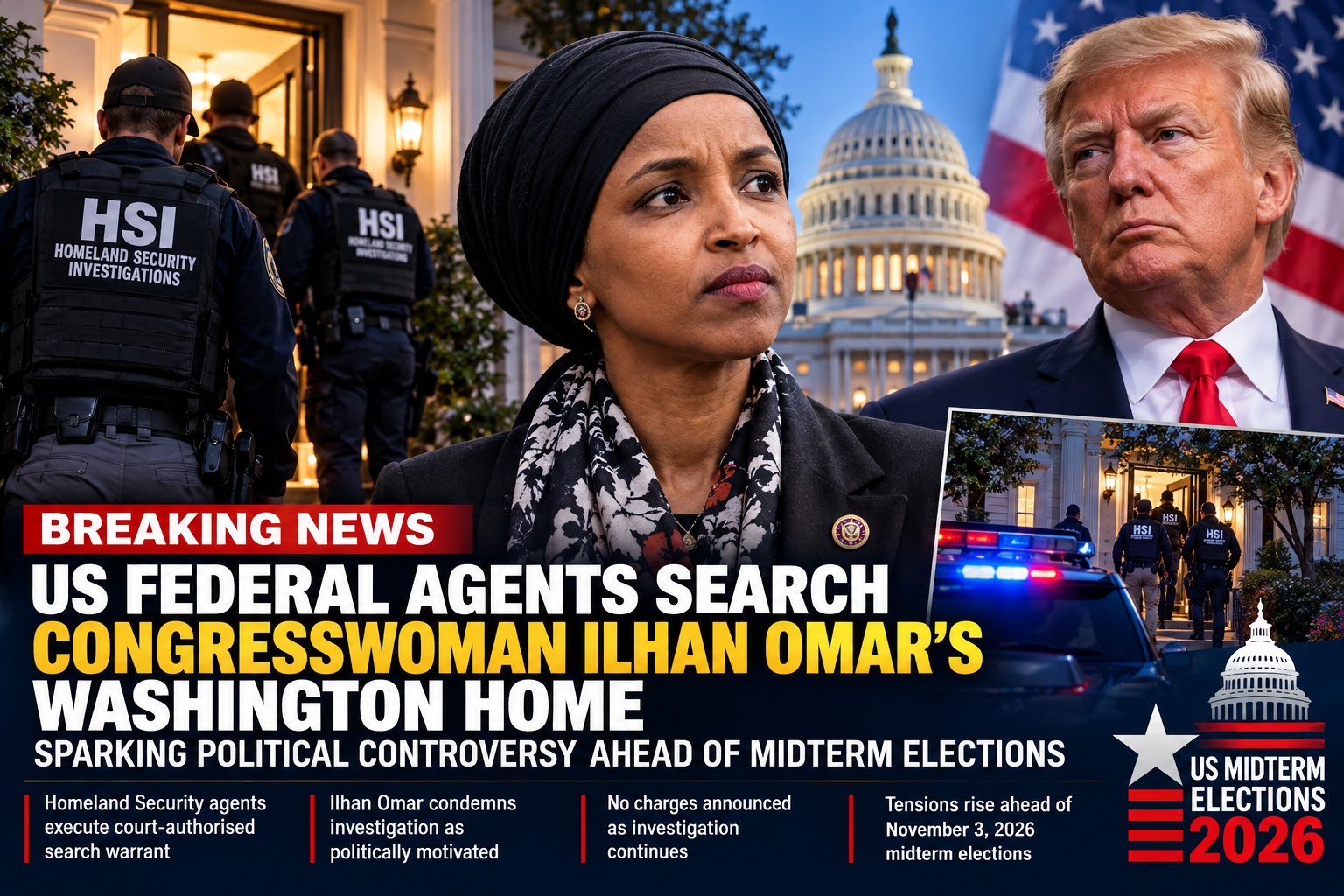
The Somali-American lawmaker denounces the federal investigation as politically motivated, while authorities confirm a court-authorised search amid growing tensions over immigration, congressional independence and the November elections. Full Article
European Union leaders prepare for high-stakes negotiations on soaring energy prices, a controversial long-term budget, support for Ukraine and Europe's economic future. Full Article
NATO declares its readiness to defend allied territory as the European Union targets nearly 1,600 Russian individuals and companies, while fresh attacks on Ukraine raise doubts about Washington's diplomatic efforts. Full Article
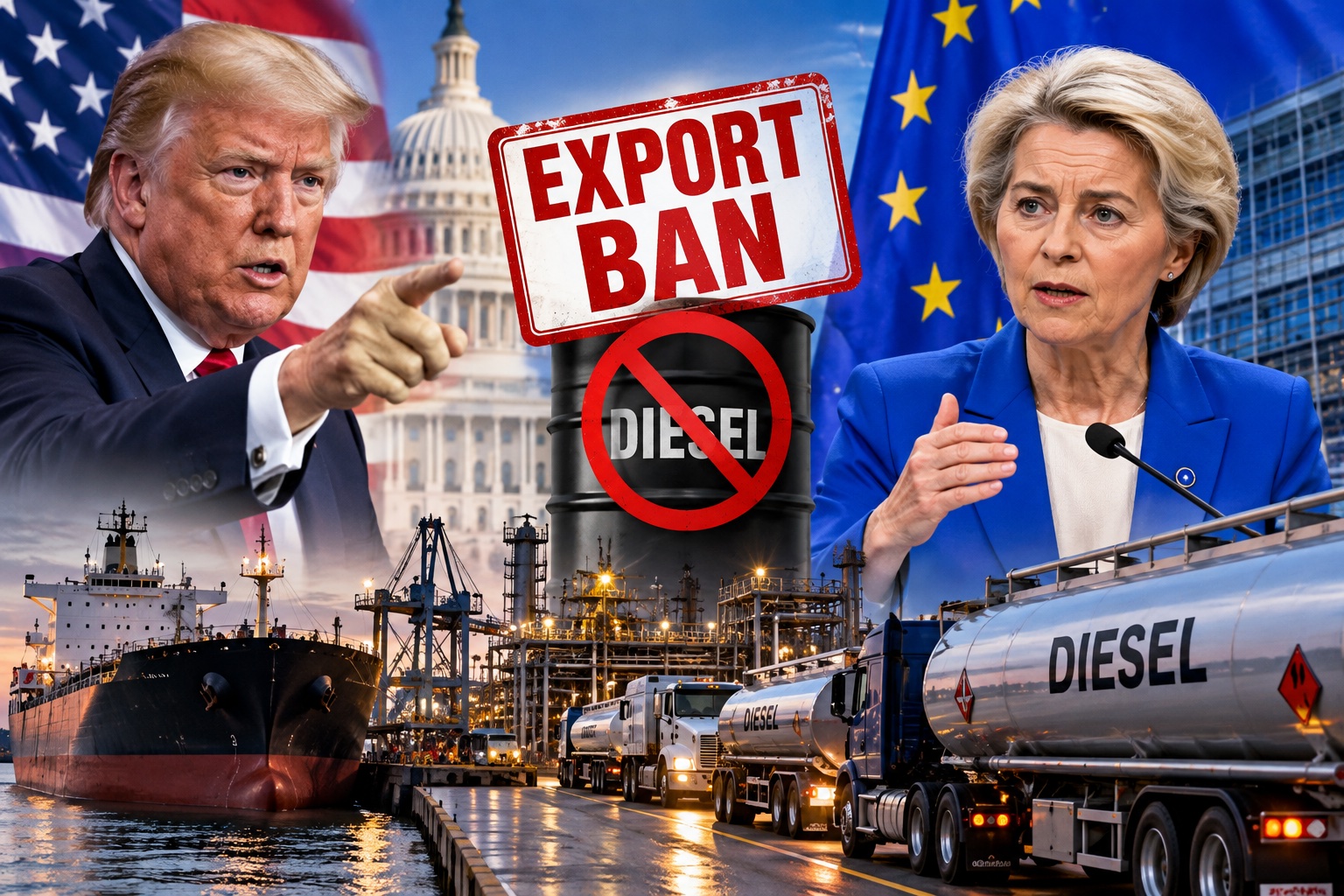
The European Union has expressed concern over reported plans by the United States to temporarily restrict diesel exports, warning that such a move could have economic consequences on both sides of the Atlantic at a time when Europe is already facing elevated energy costs. Full Article
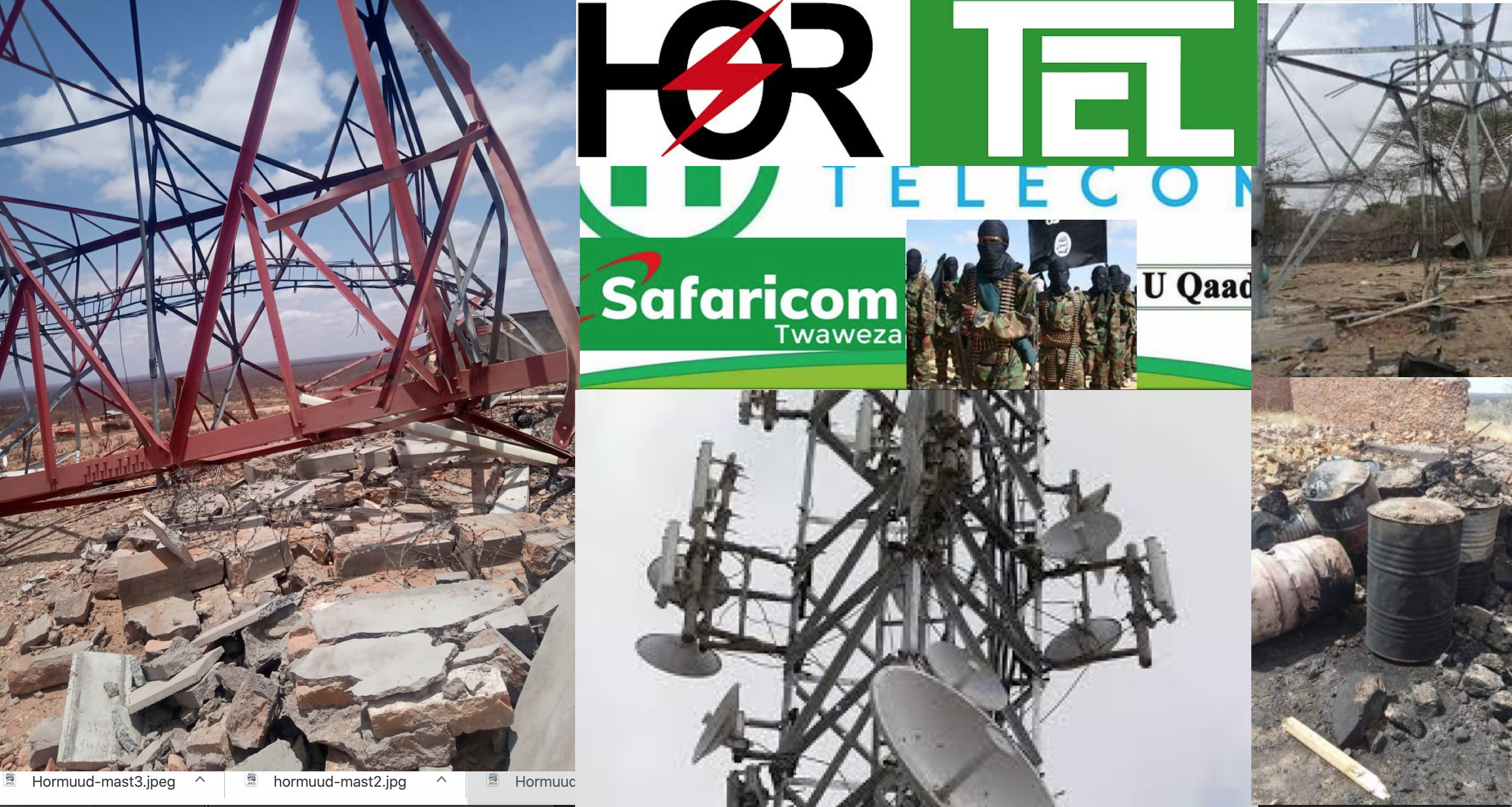
Hormuud's Assault on African Peacekeepers Figure 14: African Peace Keepers Hormuud launched a scorching public campaign against the Kenyan military forces in AMISOM in late August 2019. Full Article
Former Intel official stripped from NISA membership Full Article
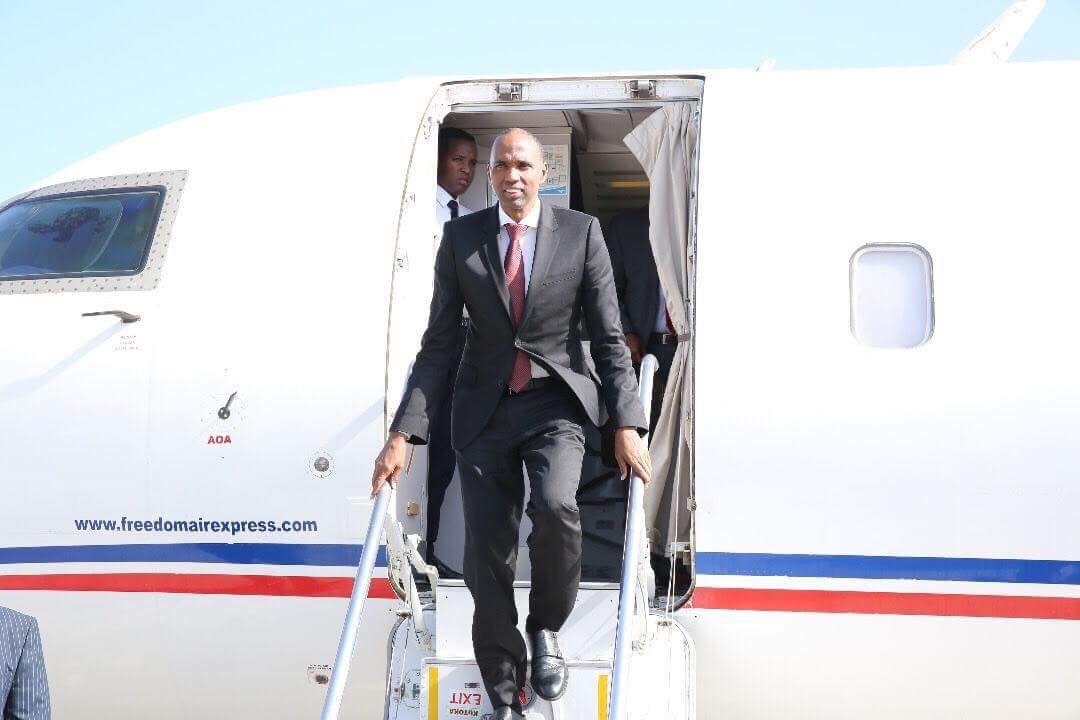
PM KHEYRE USELESS AND COSTY OVERSEAS TRIPS. Full Article
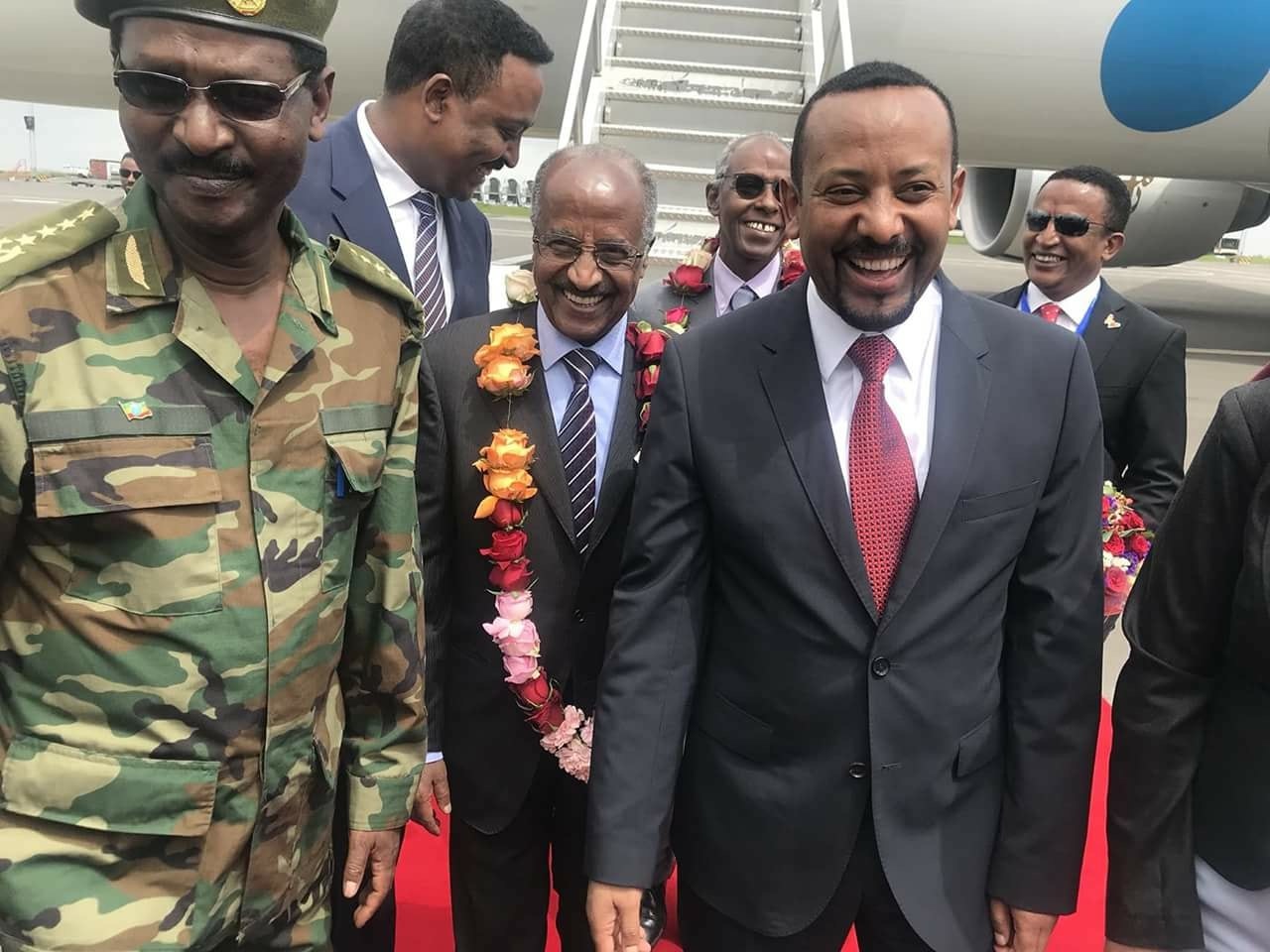
Abiy says 'New Year' will be celebrated in Eritrea, Ethiopian Airlines to resume flights Full Article
Massive rise in Islamist militant attacks in Africa Full Article


Somalia: Constitution isn't to blame for leaders falling out
The no confidence vote of the Federal Parliament of Somalia for incompetence in the Council of Ministers (Cabinet) of Prime Minister Abdi Farah Shirdon "Saa'id" on December 3, 2013 has ended seven-month-long leaks and speculations abou