

 0
0

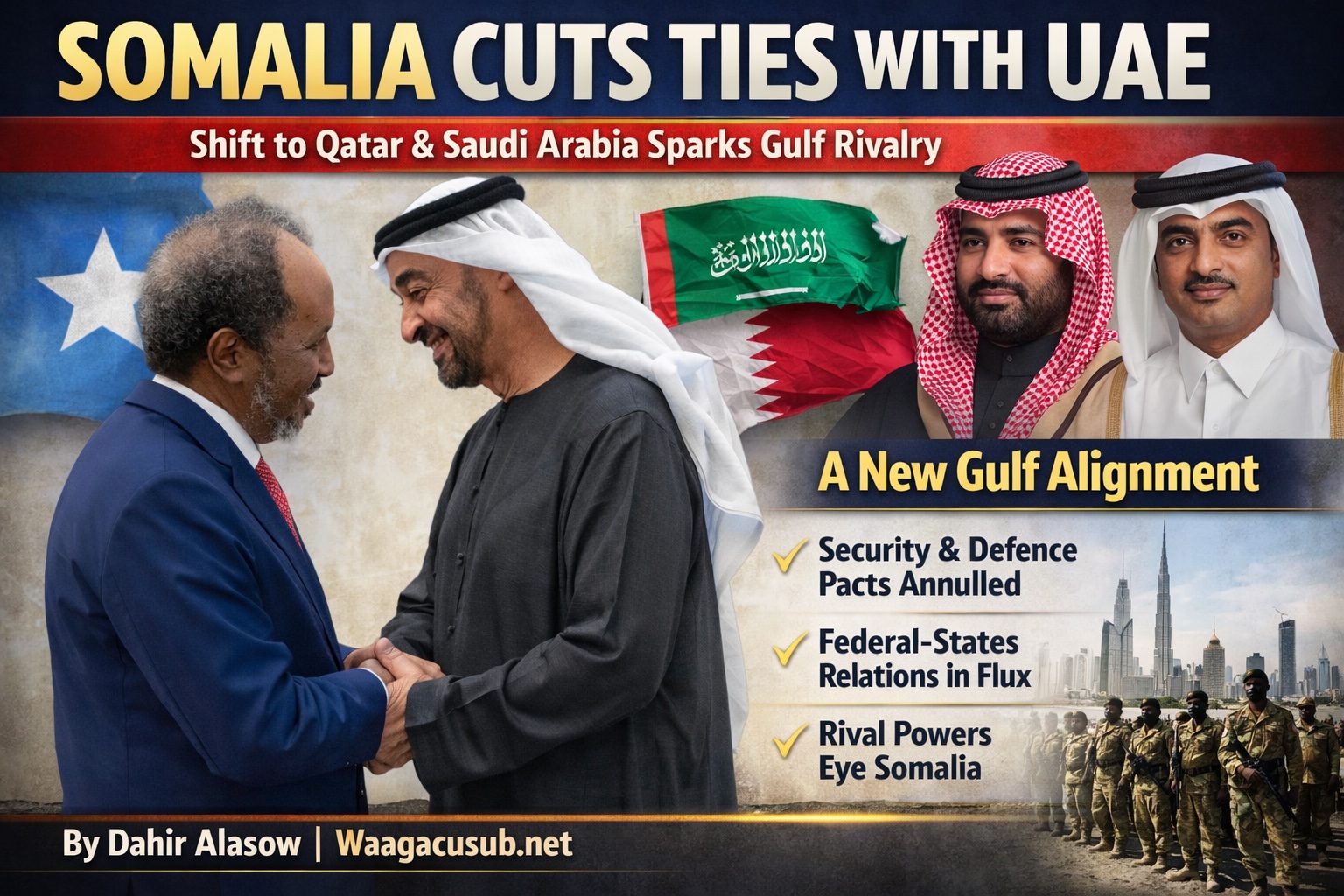

The decision was announced after an emergency meeting of the Council of Ministers, reportedly brought forward ahead of schedule—an indication that the government wanted to signal urgency and national resolve.
Somalia’s leadership has framed the cancellation as a sovereignty-protection move. This framing matters. In Somalia’s political context, the word "sovereignty” is not symbolic—rather, it is tied to:
who controls security operations,
who funds and influences armed forces,
who negotiates external partnerships, and
whether regional administrations act independently of Mogadishu in international security matters.
Somalia has long struggled with the "dual power” problem: a federal government responsible for the international face of the country, while some federal member states maintain direct external relationships—sometimes economic, sometimes political, sometimes security-related.
In that environment, external security partners can unintentionally (or intentionally) empower fragmentation.
Thus, Somalia’s Cabinet appears to have made a firm calculation: security agreements must not translate into parallel authority structures.
What makes this move even more striking is the political history. President Hassan Sheikh Mohamud has previously navigated relationships with Gulf actors pragmatically. The UAE, for years, was one of the most active external players in Somali security and political networks.
Now, the government is clearly shifting the regional anchor:
Saudi Arabia — a strategic heavyweight with diplomatic and economic gravity
Qatar — a political operator that has invested heavily in state-to-state relationships
If Doha indeed steps into the UAE’s former role—especially regarding salary support for forces—then Somalia will not only have changed partners, it will have changed the entire influence architecture surrounding national security.
This is a pivot that signals:
Somalia wants "state-to-state” support, not "network-to-network” arrangements.
Somalia has never been isolated from Gulf competition, but the arena is shifting. Previously, Gulf rivalries played out through:
media narratives
political endorsements
elite financing
development branding
indirect security engagements
Now, the rivalry is increasingly tied to who pays for security and who shapes decision-making.
That is why this decision will not remain a Mogadishu headline. It is likely to:
deepen pressure on regional leaders,
trigger diplomatic outreach campaigns,
and intensify strategic competition in security institutions.
In simple terms: Somalia is becoming a more decisive battleground of Gulf influence—not less.
A key challenge is the UAE’s historical influence with certain Somali federal member states. Some regional leaders have reportedly been visiting Dubai—an important detail not because travel itself is controversial, but because it signals ongoing channels of alignment.
Somalia’s federal structure already suffers from weak coordination. When external actors have direct influence over sub-national leaders, the result can be:
parallel negotiations,
conflicting security agendas,
competing armed units,
and increased mistrust of Mogadishu.
This is the central risk following the Cabinet’s decision:
a foreign-policy cancellation can rapidly become an internal political confrontation.
If mishandled, it could expand the distance between the federal government and some regional administrations.
Security agreements are not just papers. They translate into:
logistics, training, equipment
stipends, allowances, payments
intelligence-sharing networks
operational coordination
If UAE support exits rapidly, Somalia must answer a practical question:
Who fills the vacuum — and how quickly?
If the gap is not filled, the risks are clear:
weakened force morale if salaries/stipends stall
operational disruption
fragmented command structures
militant groups exploiting uncertainty
This is why any pivot must come with a clear continuity strategy. It is not enough to cancel agreements; Somalia must show a replacement framework for stability.
There is a larger theme behind this decision. Somalia is signaling that:
it wants partners, not patrons,
cooperation, not competition inside its politics,
investment, not leverage,
respect, not conditional influence.
This is a legitimate national ambition.
But ambitions require discipline. Somalia must ensure that new partnerships—whether with Qatar or Saudi Arabia—do not become a repeat of the same problem under a different flag.
This policy shift is bold. It is historic. It may be necessary.
Yet, it is also risky.
Somalia is stepping into a new Gulf equation where diplomacy will be sharper, competition will be deeper, and internal Somali unity will be tested.
If Mogadishu executes this decision with strategic clarity—protecting cohesion, ensuring security continuity, and maintaining a unified foreign policy—Somalia could emerge stronger and more sovereign.
If not, the country may enter another cycle of fragmented influence and competing alignments.
Somalia’s sovereignty must be defended—but sovereignty also requires strong institutions.
This decision has created a moment of national reset. Now the real work begins.
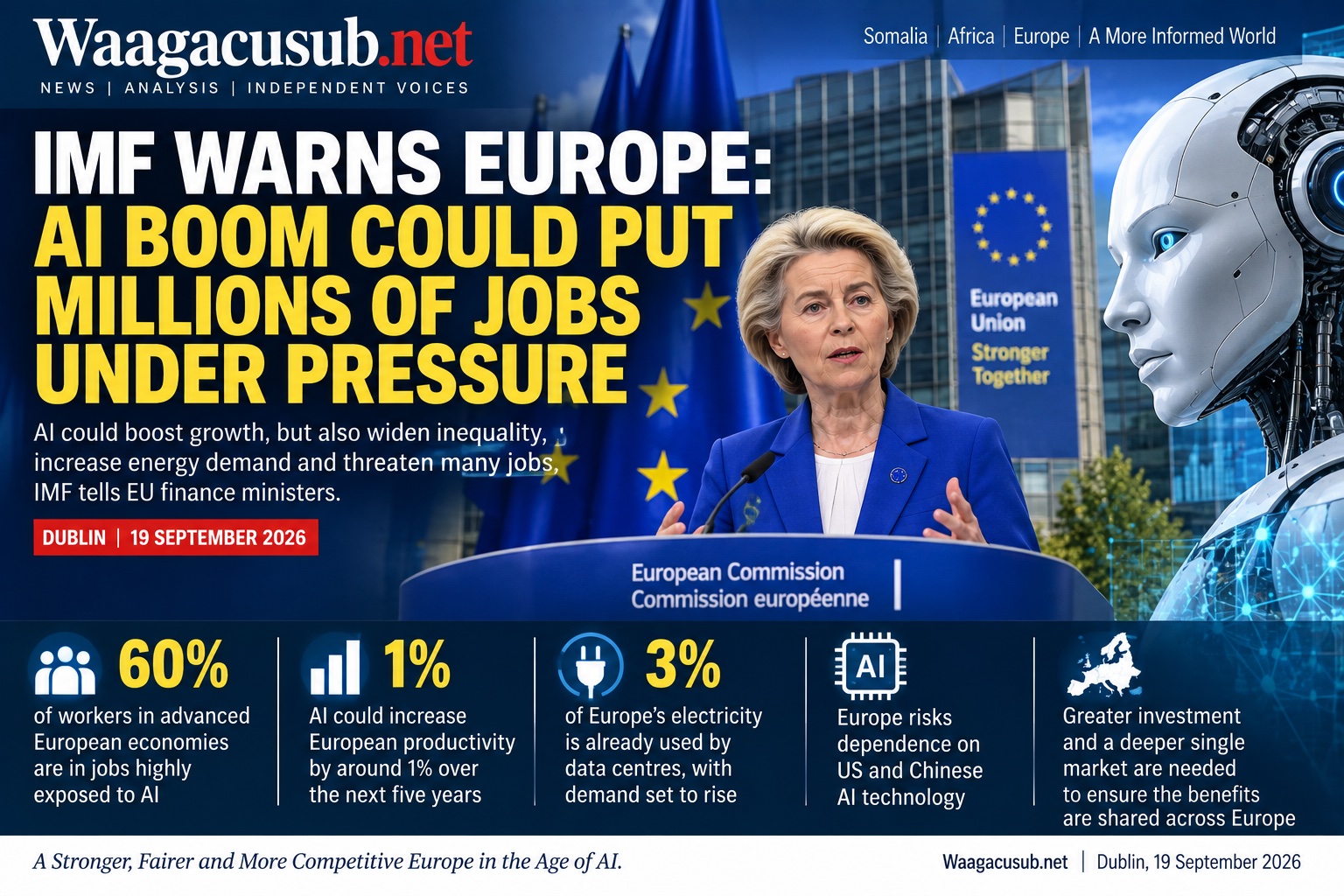
DUBLIN (Waagacusub.net) — The International Monetary Fund has warned European policymakers that the rapid expansion of artificial intelligence could boost economic productivity while also disrupting labour markets, widening inequality, straining electricity networks and increasing Europe's dependence on foreign technology. Full Article
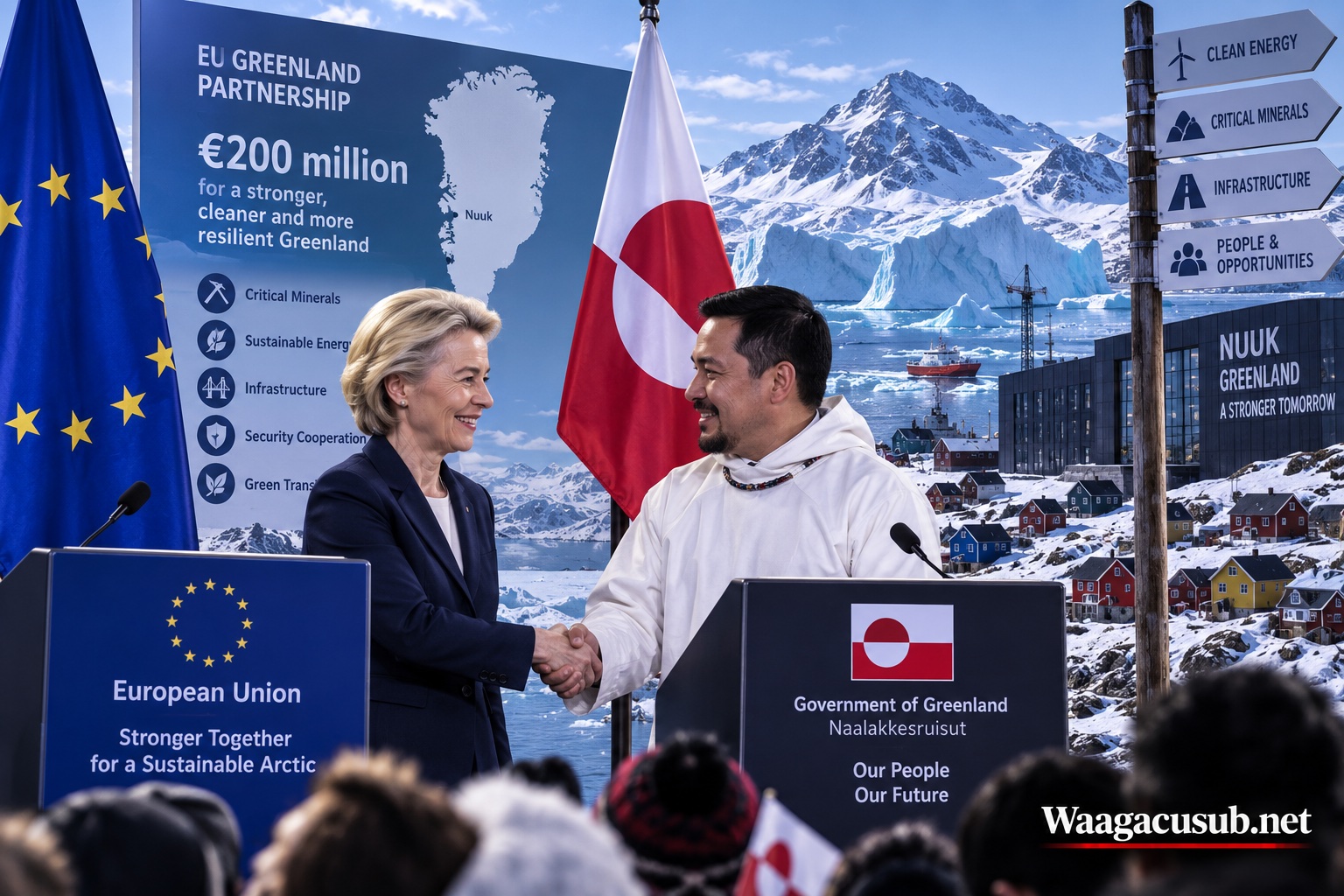
The European Union is dramatically expanding its economic and strategic engagement with Greenland, committing another €200 million as the Arctic island becomes an increasingly important arena of competition over security, critical minerals, infrastructure and geopolitical influence. Full Article
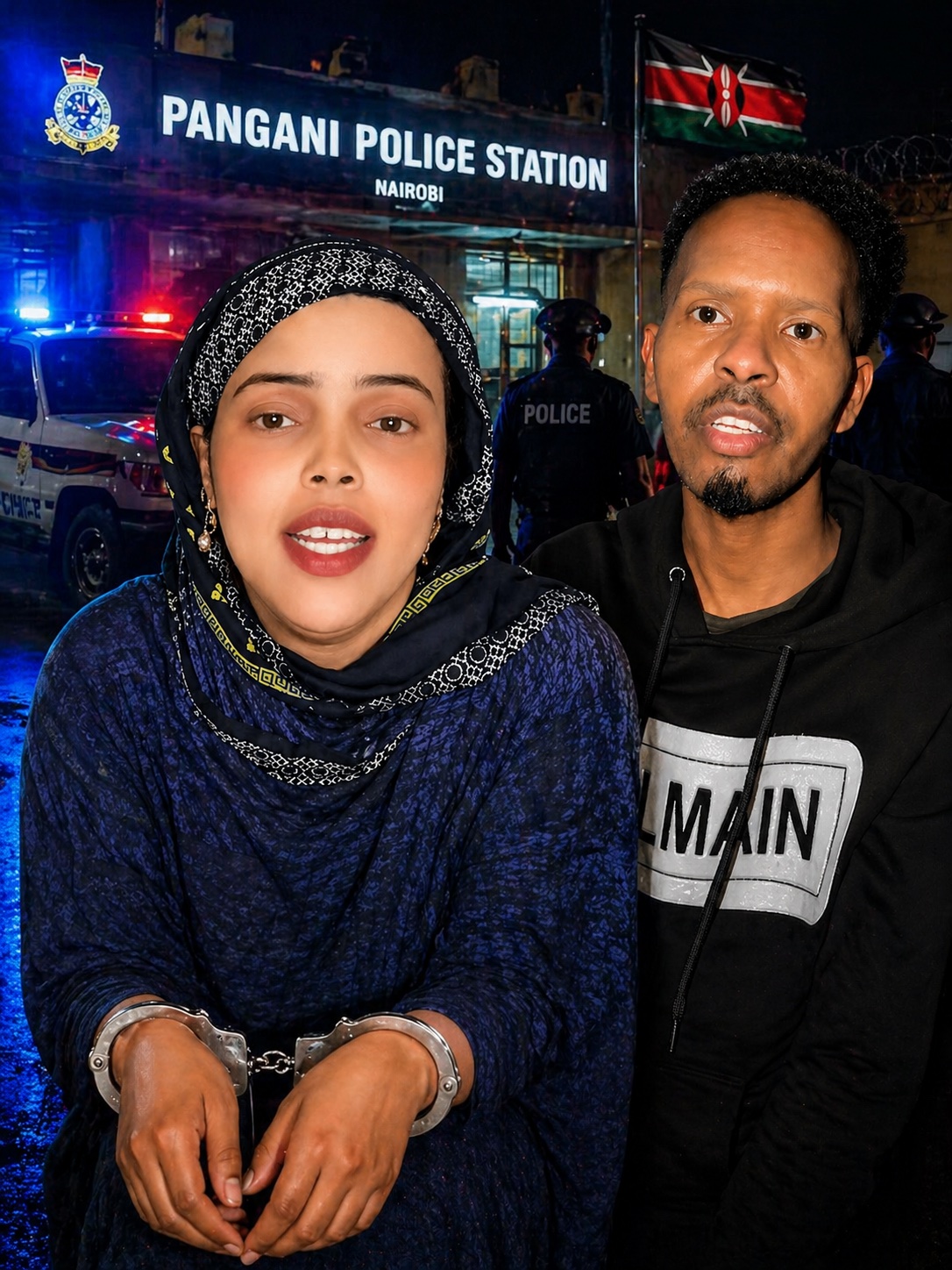
A Somali woman identified as Farhiya Abdi Mudey, also known as "HaafTurki," has reportedly been arrested in Nairobi under controversial circumstances, with emerging claims suggesting that her detention may be linked to alleged bribery involving Kenyan police officers. Full Article
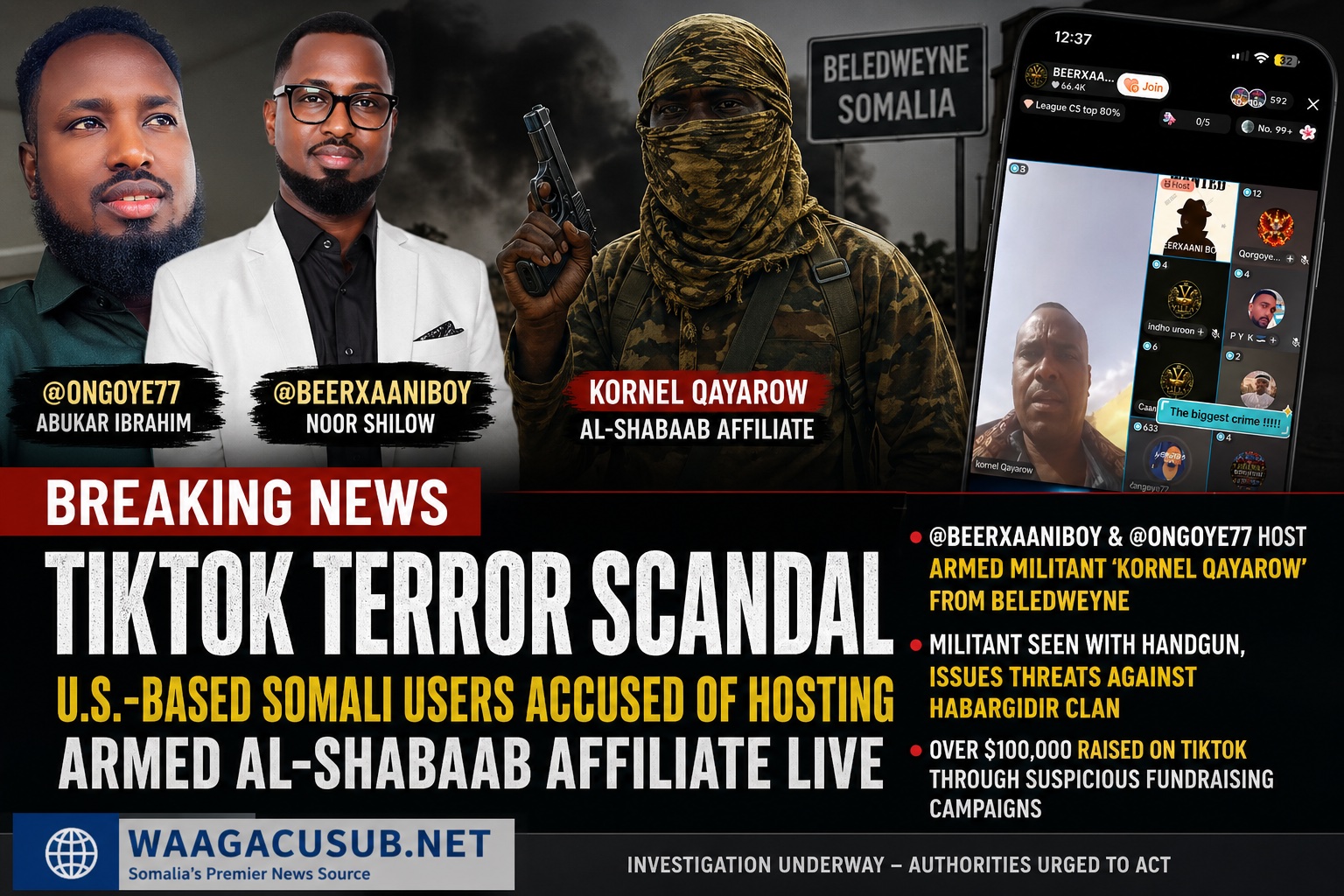
Serious allegations have emerged against two Somali TikTok users reportedly based in the United States, identified by their usernames @BeerxaaniBoy (Noor Shilow) and @Ongoye77 (Abukar Ibrahim), after a disturbing livestream featured an armed individual believed to be linked to the militant group Al-Shabaab. Full Article
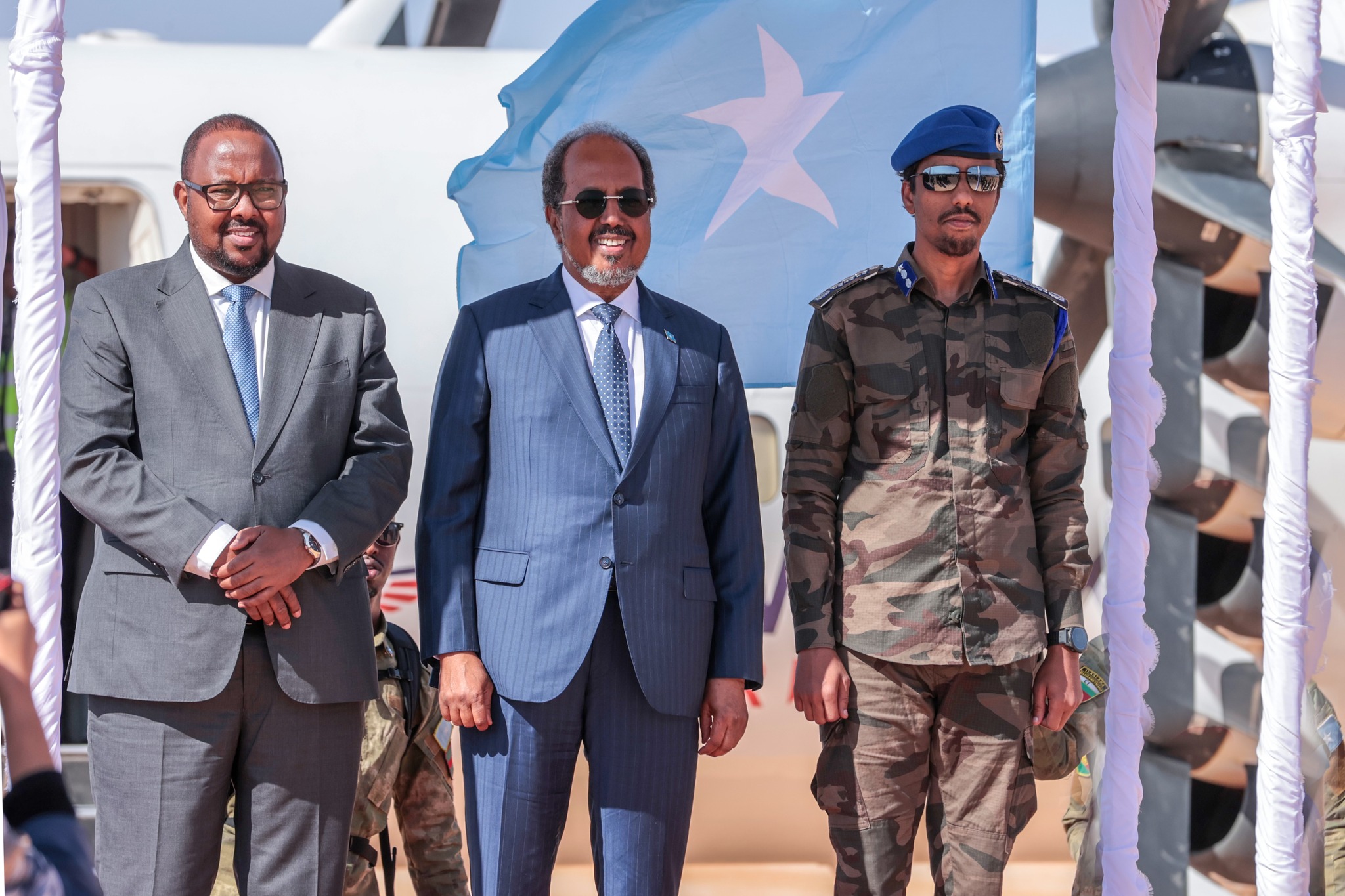
LAS ANOD, Somalia/Somaliland contested area — Somali Police Force Commander General Asad Diyaano has emerged as a nationally respected security figure, praised for professional leadership, discipline, and measurable reforms within the Somali Police Force, while also maintaining close operational coordination with President Hassan Sheikh Mohamud amid heightened security challenges. Full Article
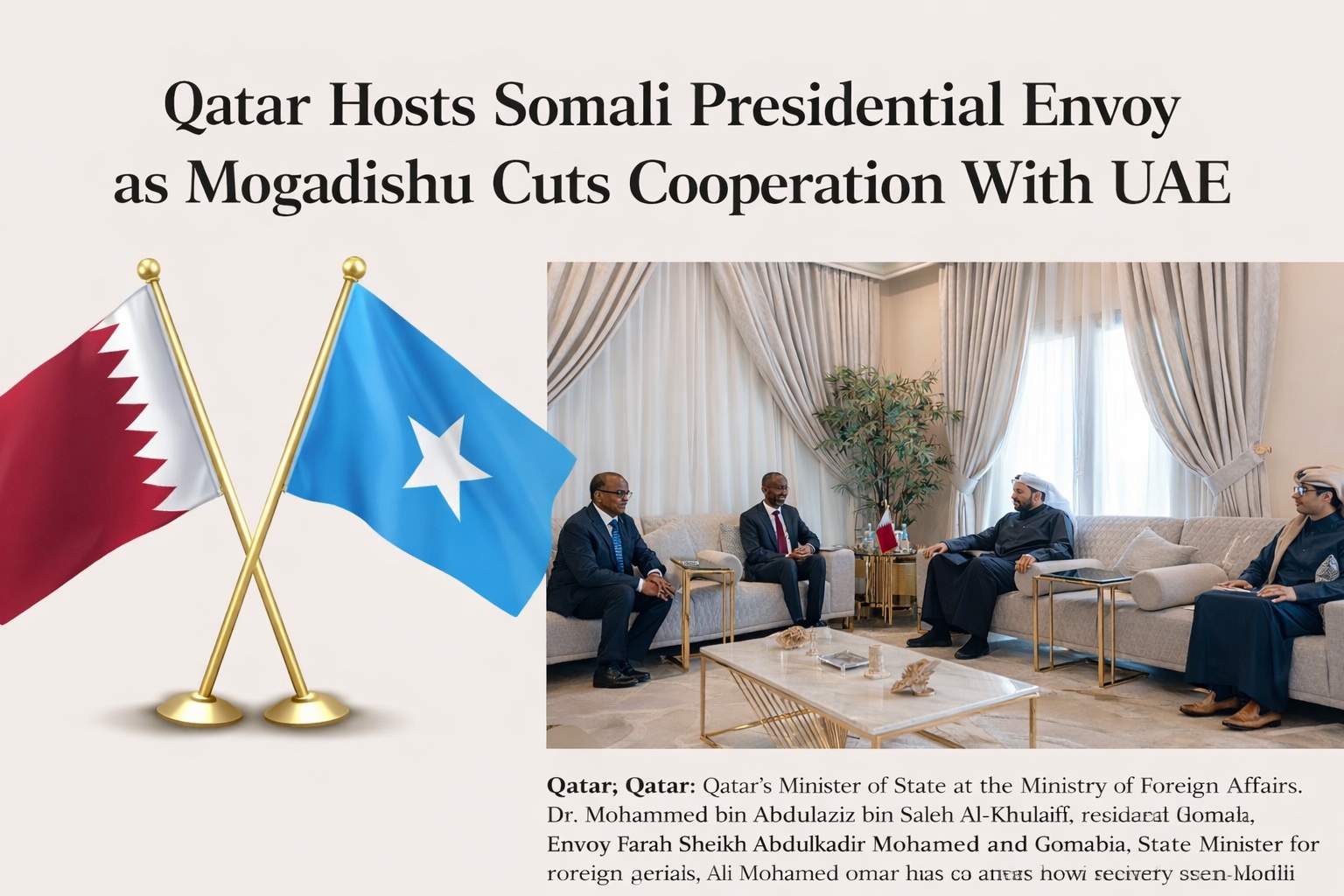
Somalia's political reorientation in the Gulf region is becoming increasingly visible, as Qatar's Ministry of Foreign Affairs confirmed a high-level meeting in Doha with Somali officials — just days after the Somali government announced it had terminated key security and cooperation agreements with the United Arab Emirates (UAE). Full Article

Across Europe, North America, and other regions, Somali communities living in the diaspora are increasingly confronting a serious and troubling challenge: the widespread use of online blackmail and digital abuse targeting women and children on social media platforms. Full Article
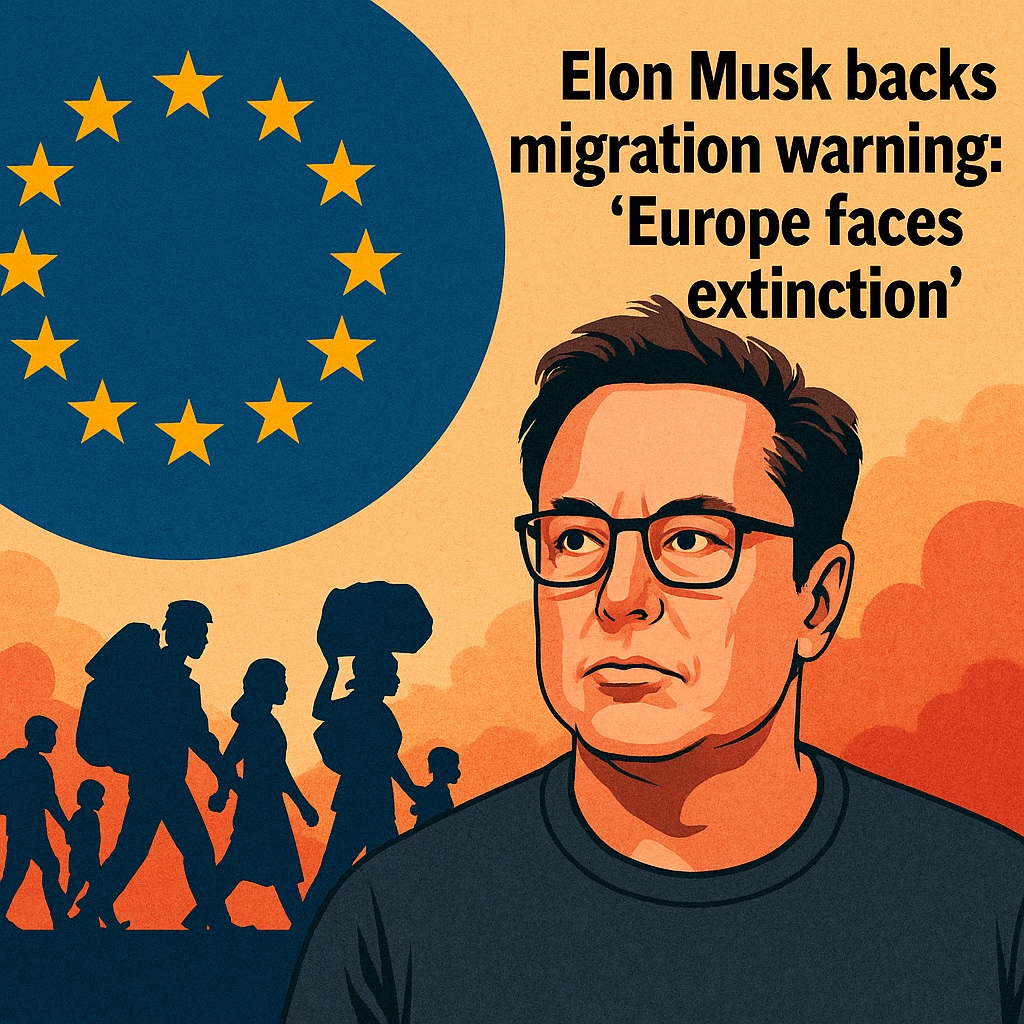
A powerful debate erupted online today after tech billionaire Elon Musk publicly endorsed an opinion warning that Europe will "face its own extinction" if it fails to open its doors to migrants. The message, originally shared by Australian activist Drew Pavlou, referenced a strongly worded article by British columnist George Monbiot, who argues that demographic decline across the continent makes migration not only useful, but essential for Europe's survival. Full Article

The Hague – The Government of the Netherlands has announced a significant increase in emergency humanitarian assistance to Sudan, pledging an additional €10 million to support millions of civilians affected by the ongoing conflict and widespread displacement. The new funding comes on top of previous Dutch humanitarian contributions to Sudan, and it aims to provide urgent relief in areas such as food security, healthcare, clean water, shelter, and protection for vulnerable groups — including women, children, and internally displaced families. Full Article

Waagacusub.net Somalia's sports landscape is undergoing the most transformative progress in decades, thanks to the leadership of the Minister of Sports and Youth Affairs, Mohamed Abdulkadir Ali, whose term in office has redefined the role of sports in national development, youth empowerment, and international cooperation. Over the past period in leadership, the Minister has championed an ambitious reform agenda focused on rebuilding sports infrastructure, reactivating national and regional tournaments, empowering young athletes, and restoring Somalia's visibility on the global stage. His tenure has been characterized by strategic planning, hands-on management, and high-level diplomacy that positioned Somalia back into the heart of international sports. Full Article
DUBLIN (Waagacusub.net) — The International Monetary Fund has warned European policymakers that the rapid expansion of artificial intelligence could boost economic productivity while also disrupting labour markets, widening inequality, straining electricity networks and increasing Europe's dependence on foreign technology.
The European Union is dramatically expanding its economic and strategic engagement with Greenland, committing another €200 million as the Arctic island becomes an increasingly important arena of competition over security, critical minerals, infrastructure and geopolitical influence.
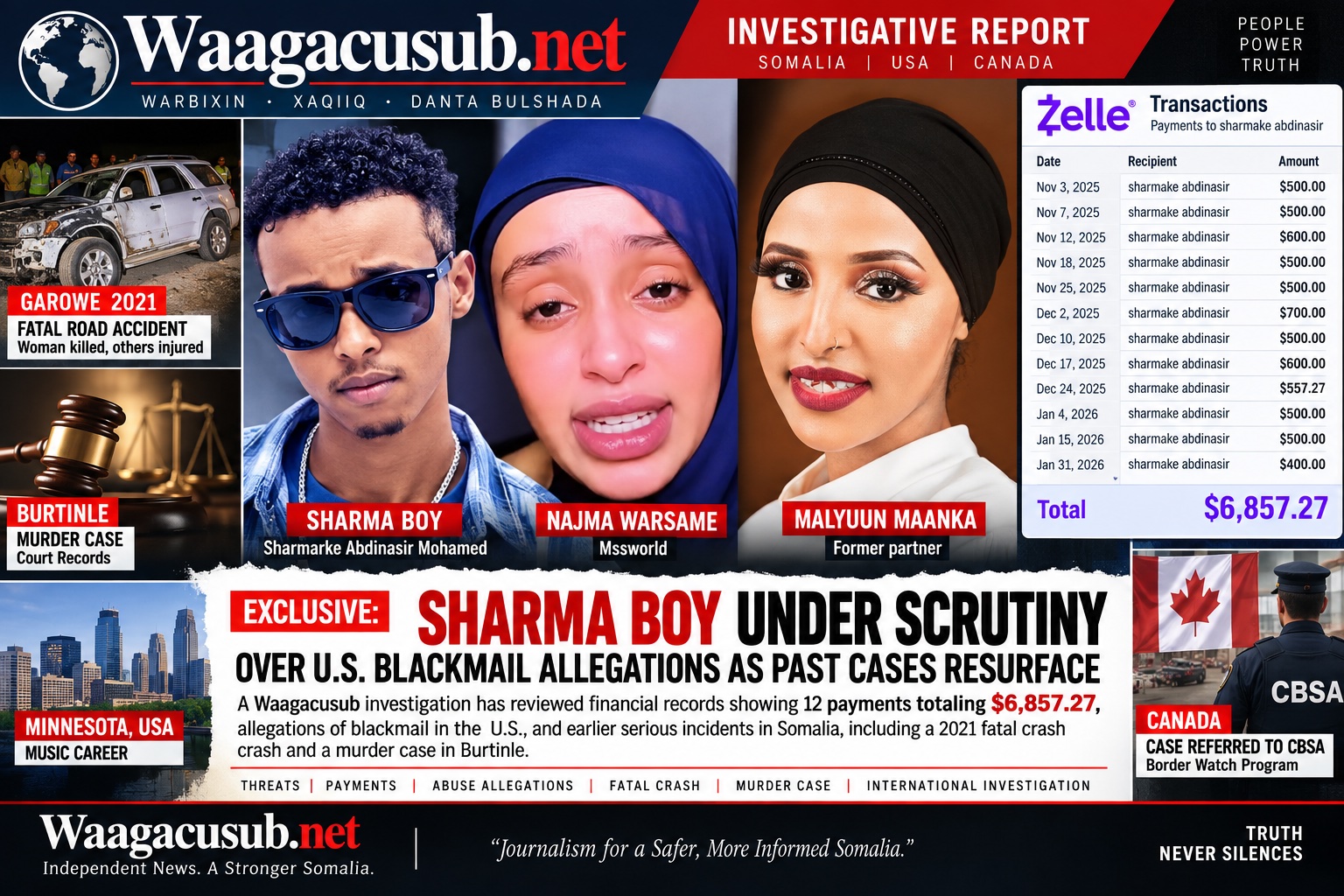
MOGADISHU / MINNEAPOLIS — Somali rapper Sharmarke Abdinasir Mohamed, widely known as Sharma Boy, is facing renewed scrutiny following allegations that he used threats, blackmail and sustained pressure to obtain thousands of dollars from a Somali-American woman in the United States.
MOGADISHU — Concerns are growing among Somali intellectuals, civil society organizations, retired military officers, and democracy advocates that Somalia is entering a dangerous period of political instability marked by increasing militarization and shrinking space for democratic participation. The concerns come amid escalating confrontations in Mogadishu and reports of civilian casualties, displacement, and destruction resulting from recent clashes between government forces and opposition-aligned groups.
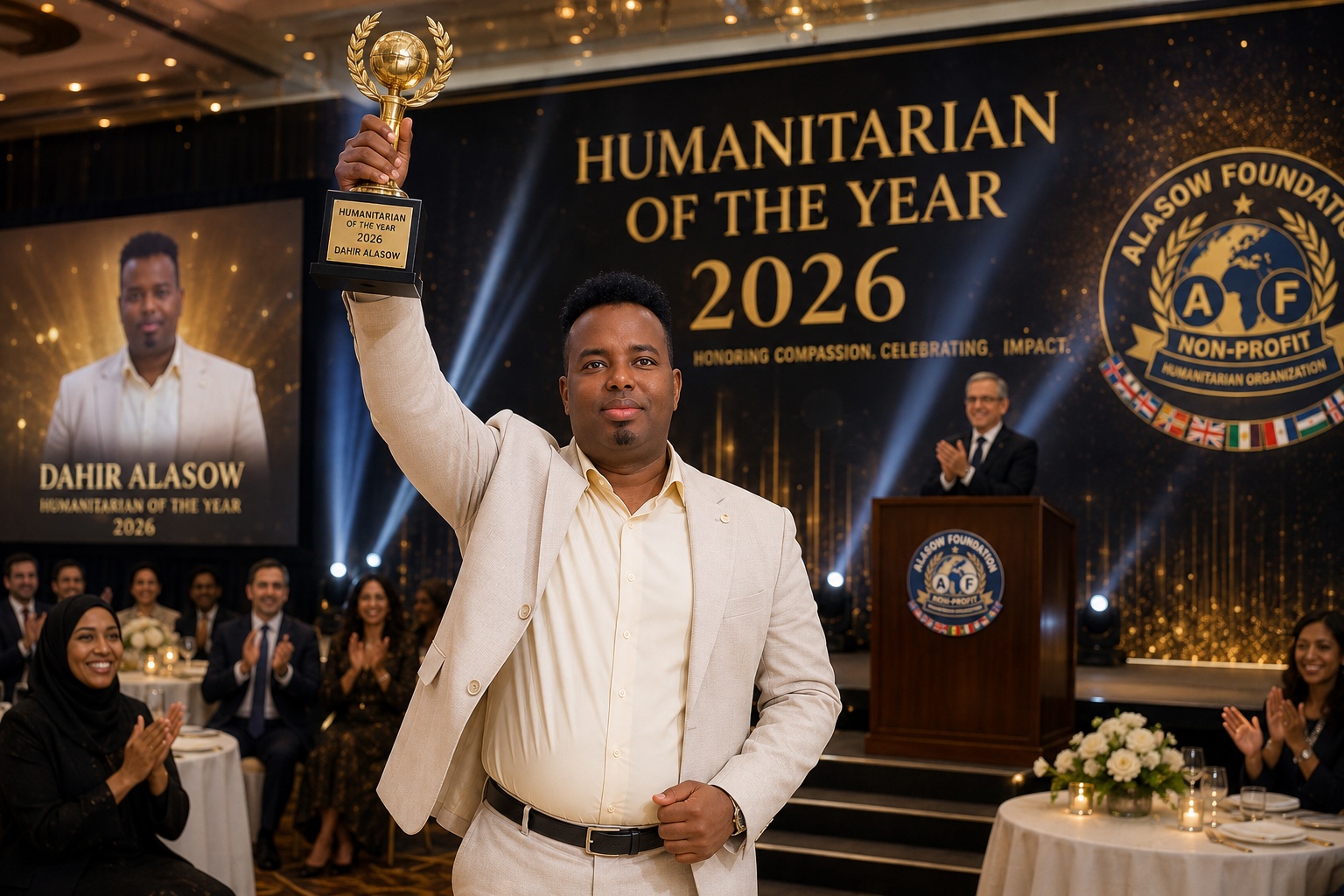
Prominent Somali investigative journalist and philanthropist Dahir Abdulle Alasow has been honored with the prestigious Humanitarian of the Year 2026 Award, recognizing his growing humanitarian impact through the international charity organization Alasow Foundation.




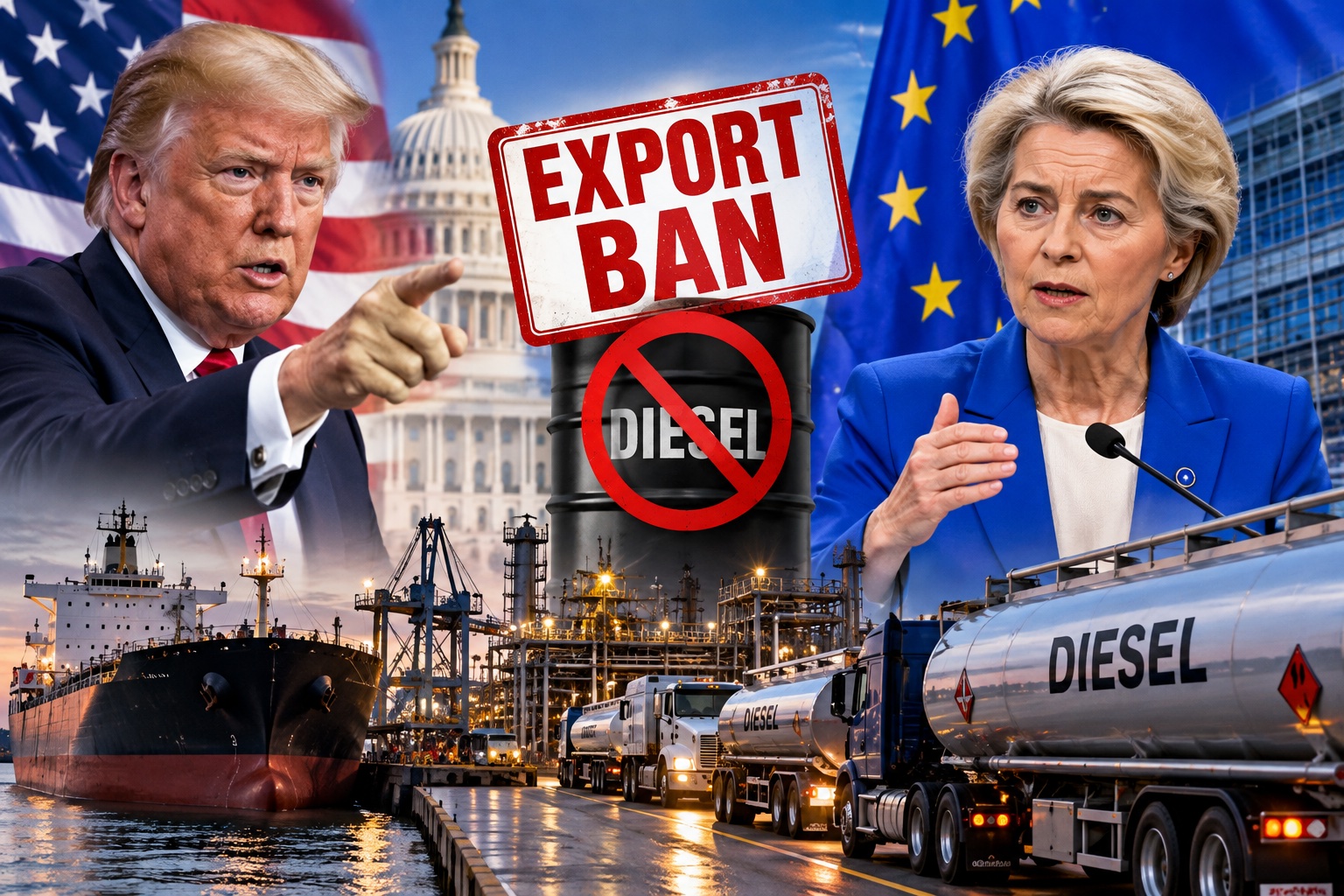
The European Union has expressed concern over reported plans by the United States to temporarily restrict diesel exports, warning that such a move could have economic consequences on both sides of the Atlantic at a time when Europe is already facing elevated energy costs. Full Article
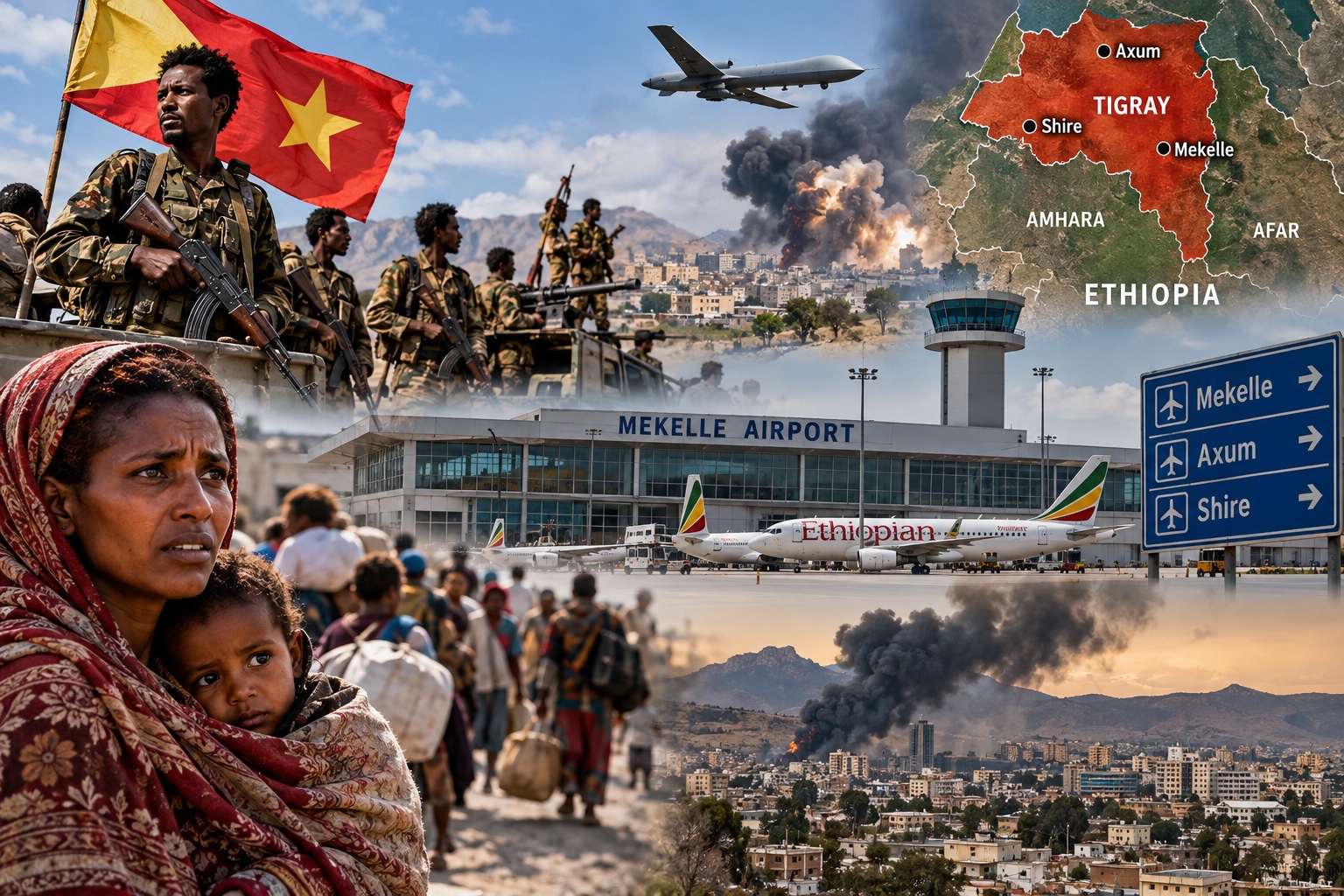
Ethiopia is confronting its most dangerous northern military escalation since the 2022 Pretoria peace agreement, as renewed fighting spreads across Tigray, Amhara and Afar and raises fears that a country still carrying the scars of its last devastating war could be sliding toward another major conflict. Full Article
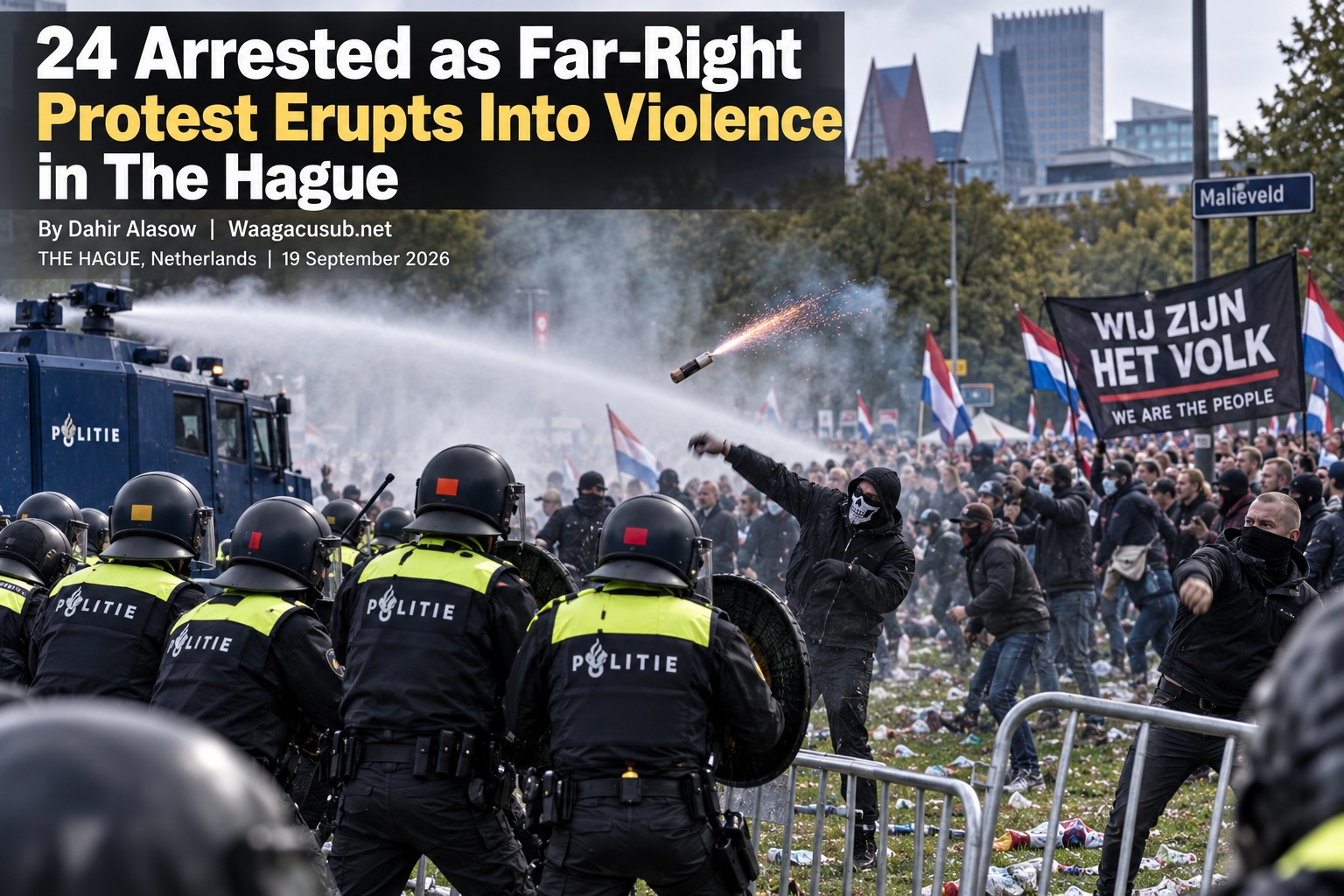
Dutch riot police arrested 24 people on Saturday after a demonstration in The Hague descended into violence, with protesters throwing fireworks and other objects at police officers. Full Article
DUBLIN (Waagacusub.net) — The International Monetary Fund has warned European policymakers that the rapid expansion of artificial intelligence could boost economic productivity while also disrupting labour markets, widening inequality, straining electricity networks and increasing Europe's dependence on foreign technology. Full Article
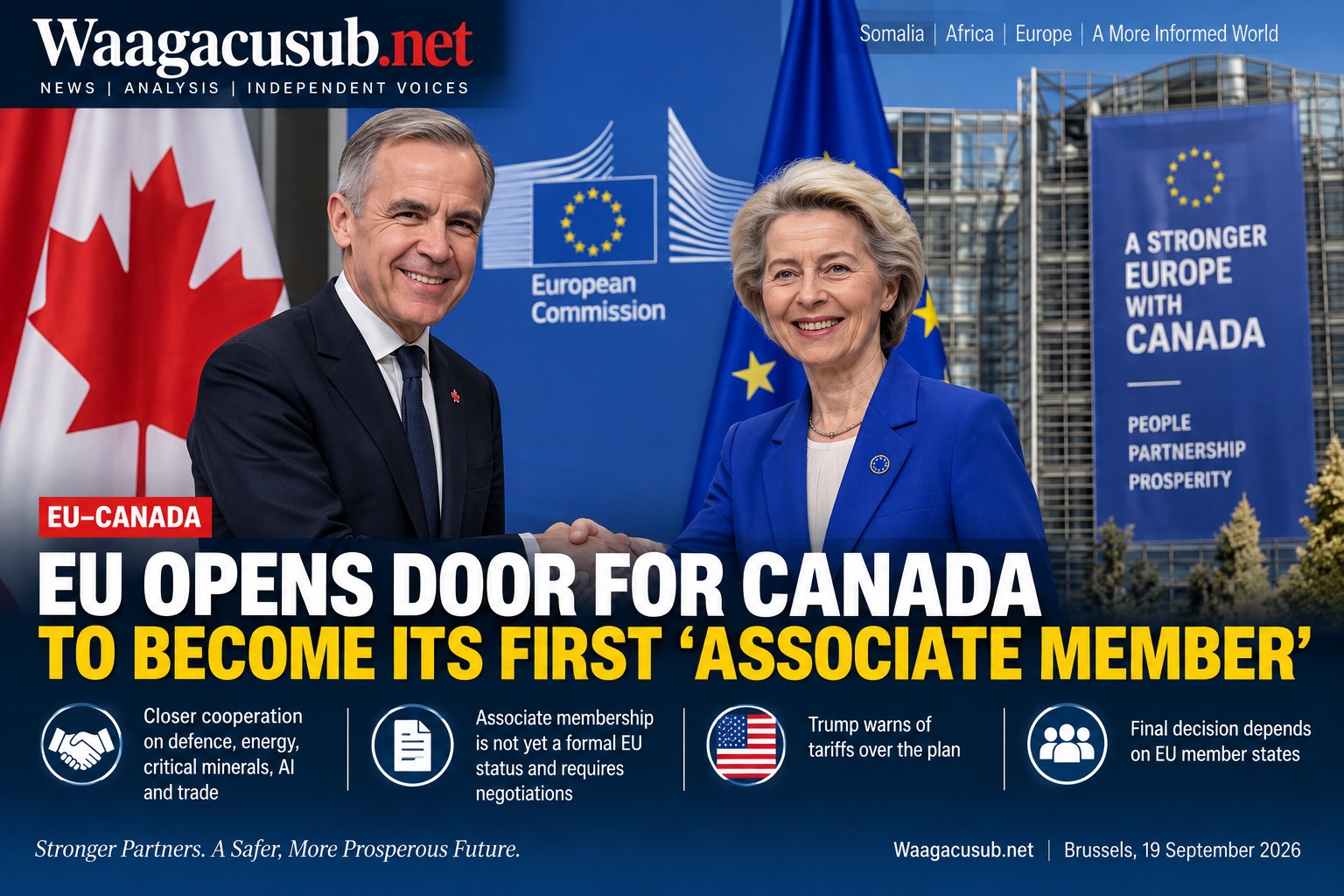
BRUSSELS (Waagacusub.net) — The European Union has opened the door to an unprecedented new relationship with Canada, with European Commission President Ursula von der Leyen proposing that the country become the bloc's first-ever "associate member." The proposal, announced on September 16, could significantly deepen cooperation between Canada and the 27-member European Union in defence, energy, critical minerals, artificial intelligence and digital trade. Full Article
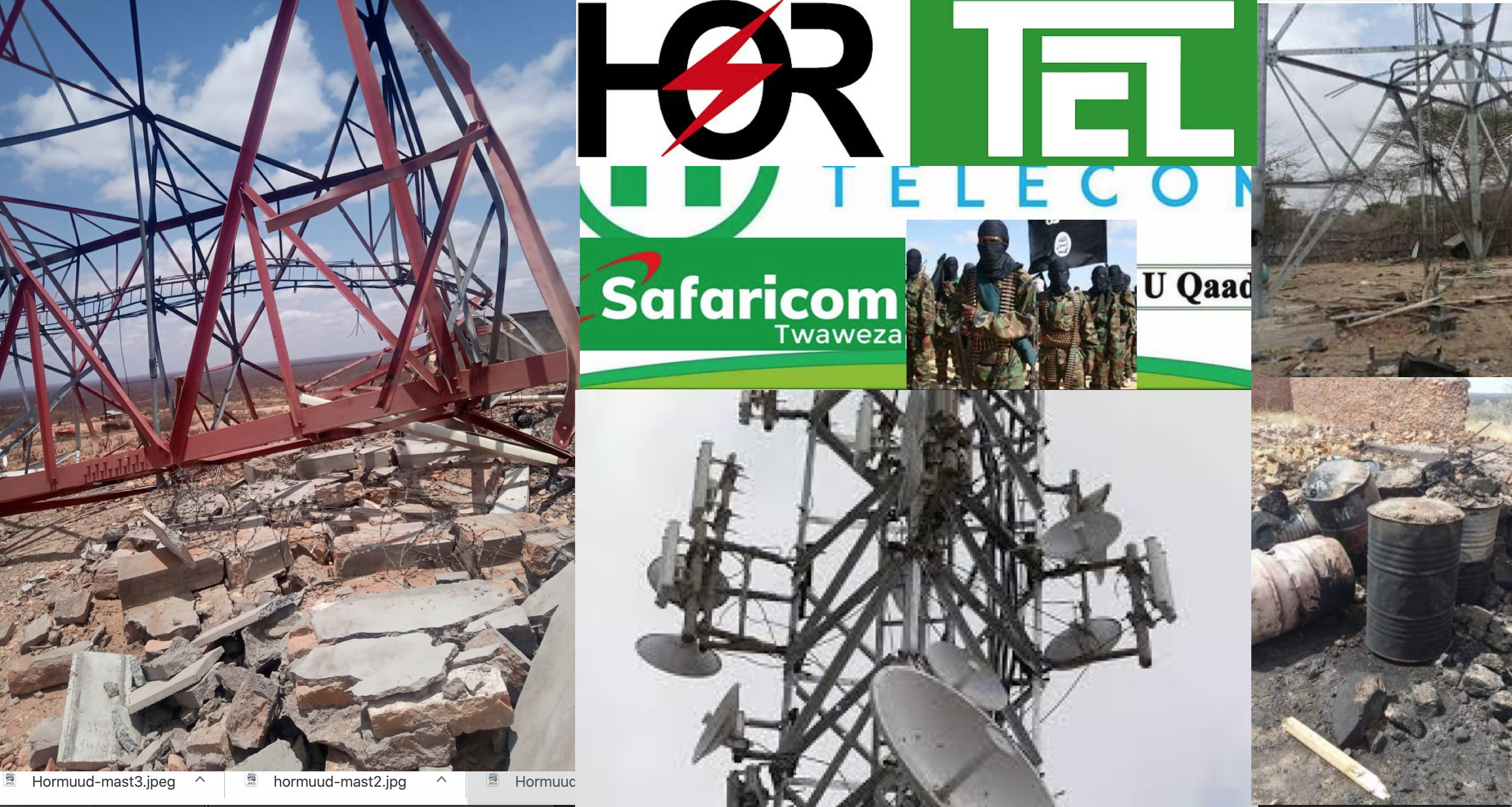
Hormuud's Assault on African Peacekeepers Figure 14: African Peace Keepers Hormuud launched a scorching public campaign against the Kenyan military forces in AMISOM in late August 2019. Full Article
Former Intel official stripped from NISA membership Full Article
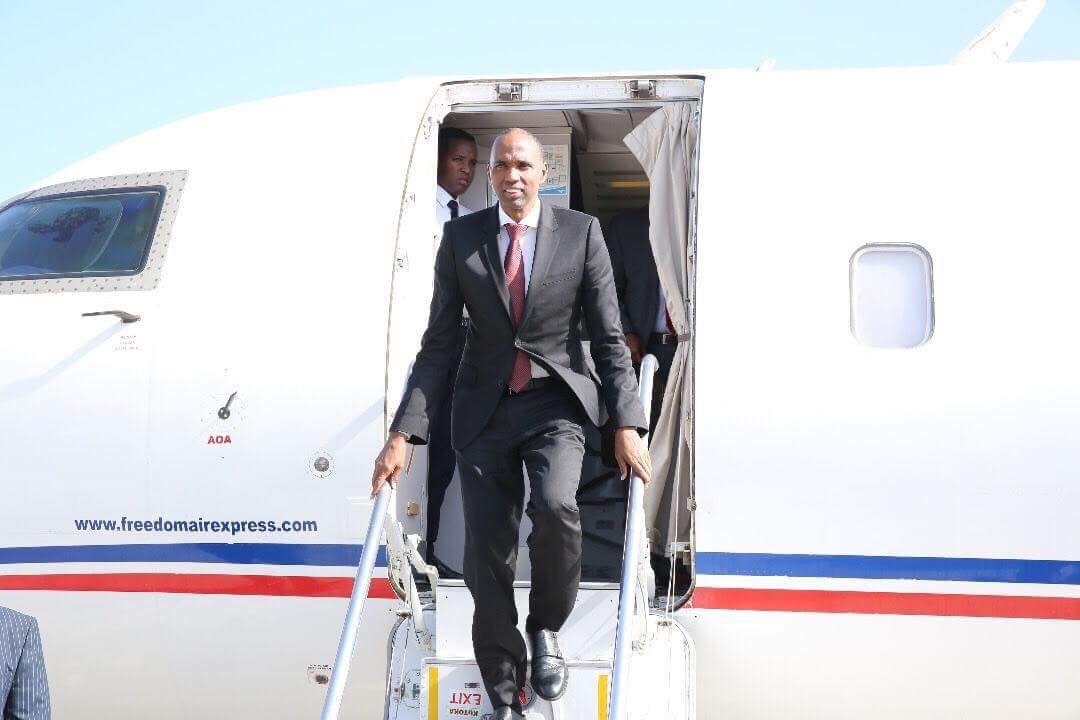
PM KHEYRE USELESS AND COSTY OVERSEAS TRIPS. Full Article
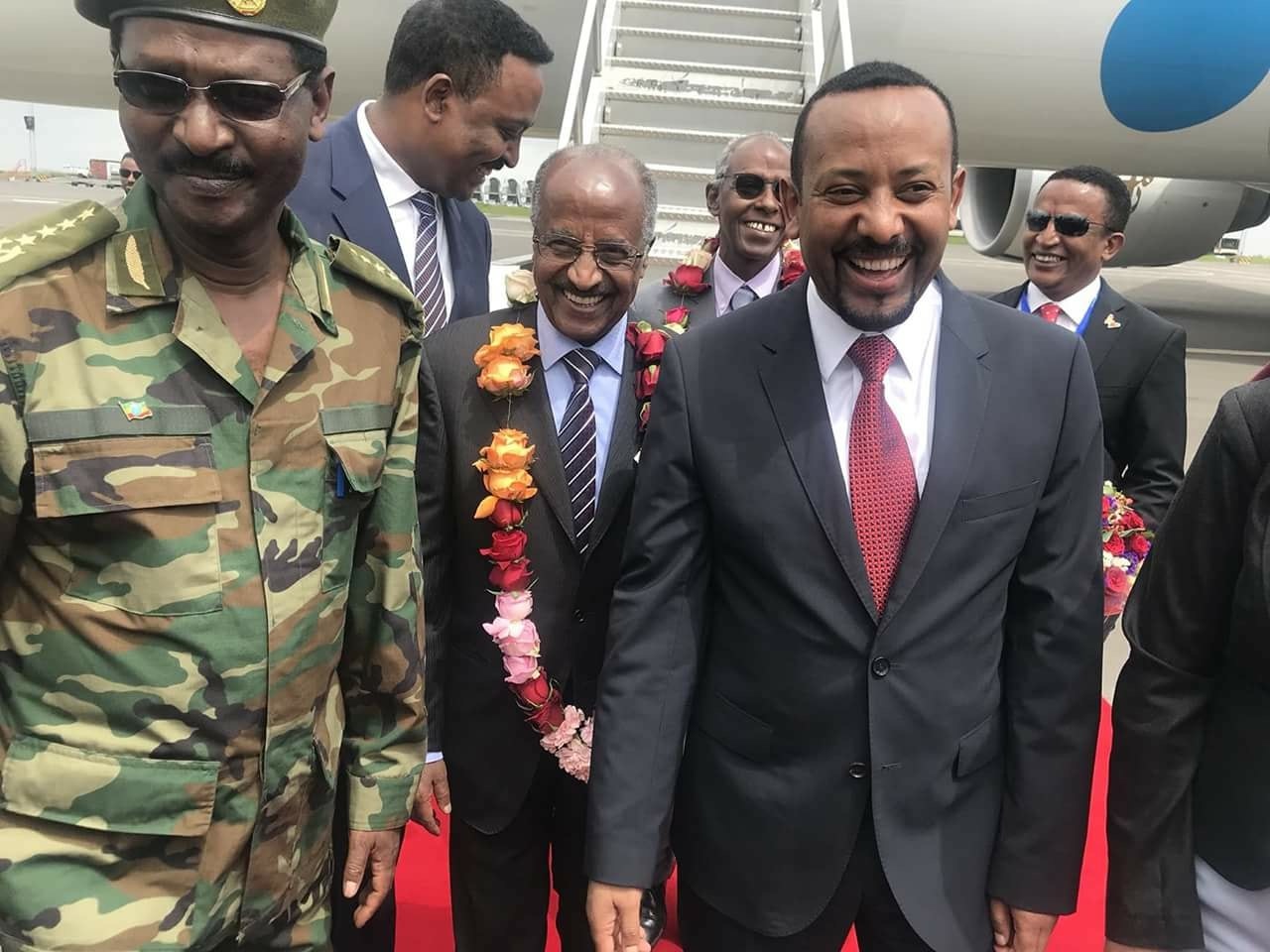
Abiy says 'New Year' will be celebrated in Eritrea, Ethiopian Airlines to resume flights Full Article
Massive rise in Islamist militant attacks in Africa Full Article

Somalia's Break with the UAE Signals a New Gulf Power Equation — and a High-Risk Reset
By Dahir Alasow | Waagacusub.net — Opinion / Analysis Mogadishu — The Federal Government of Somalia's decision to annul all cooperation agreements with the United Arab Emirates (UAE)—including security and defence-related ar